
Structural solvers & SDKs.
Standalone and integrated structural solvers for fast performance and advanced functionality
Standalone structural solvers
Built on top of Nastran (NASA Structural Analysis), our standalone structural solvers enhance the performance of existing features and introduce new, advanced capabilities.
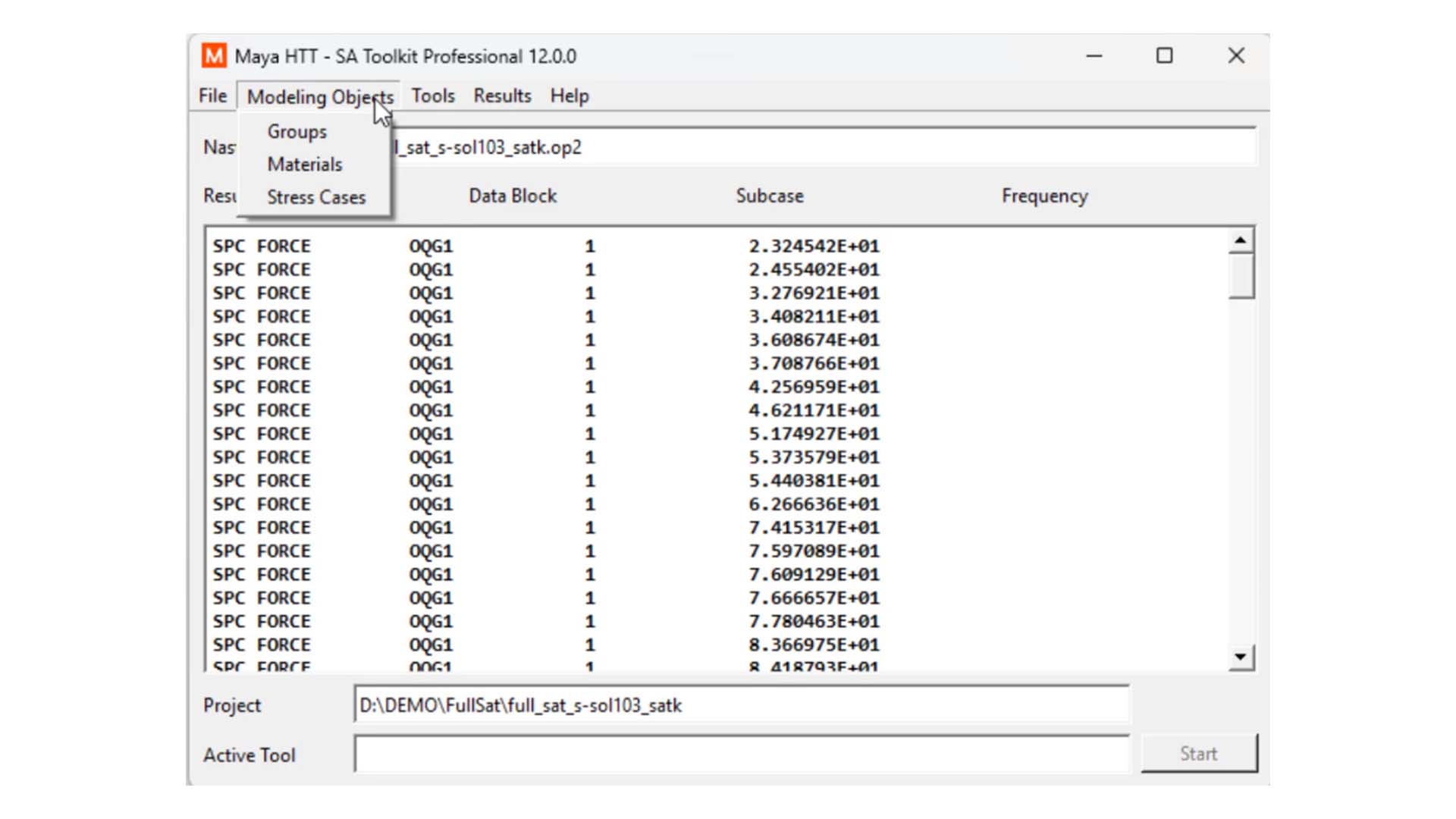
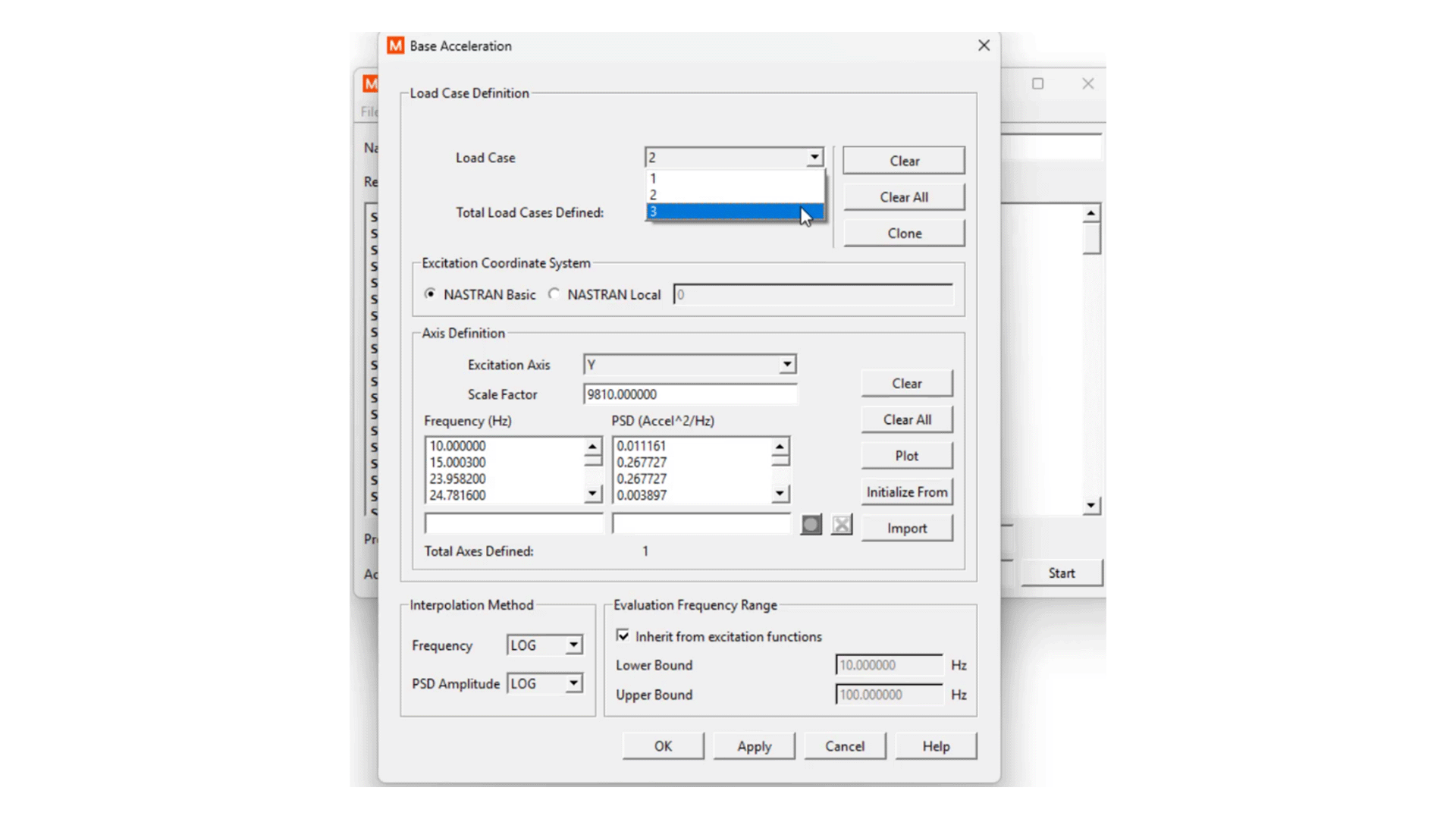
- Structural Analysis Toolkit (SATK) solver reads the normal modes calculated by Nastran’s SOL103 analysis and performs random vibration response calculations more efficiently than traditional Nastran methods.
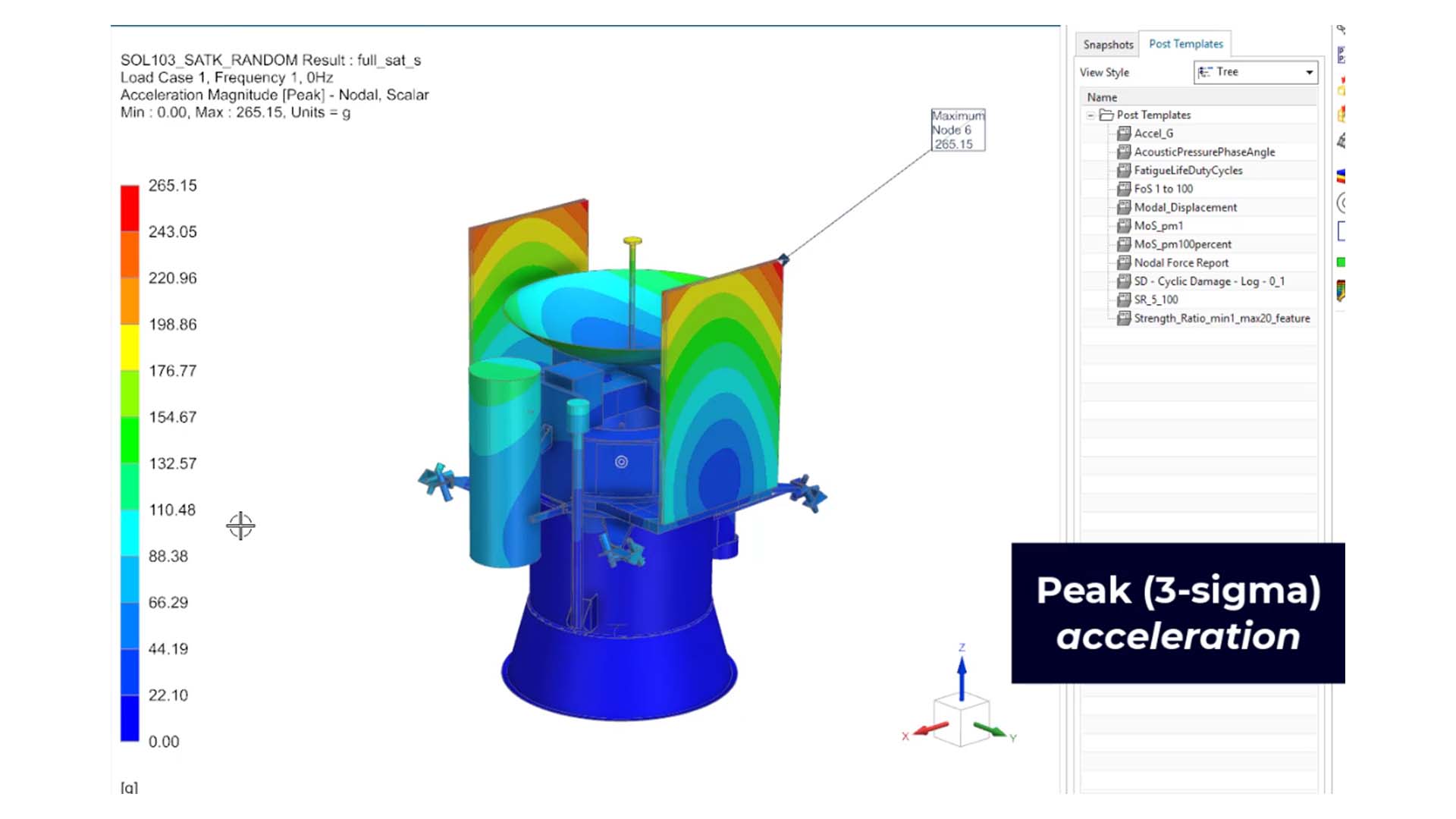
- Advanced functionalities for calculating peak responses in addition to RMS response deliver a deeper understanding of complex structural behavior.
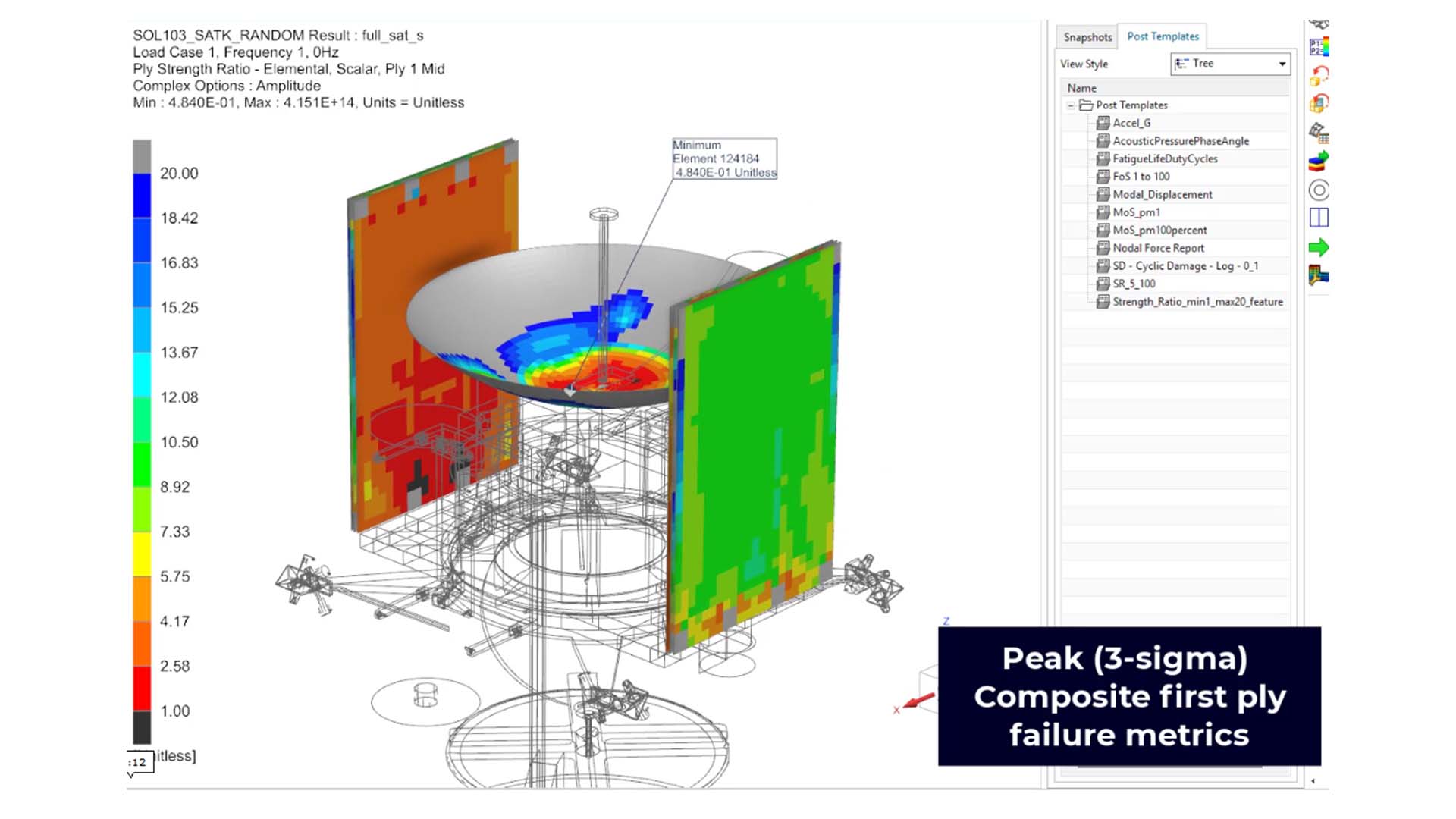
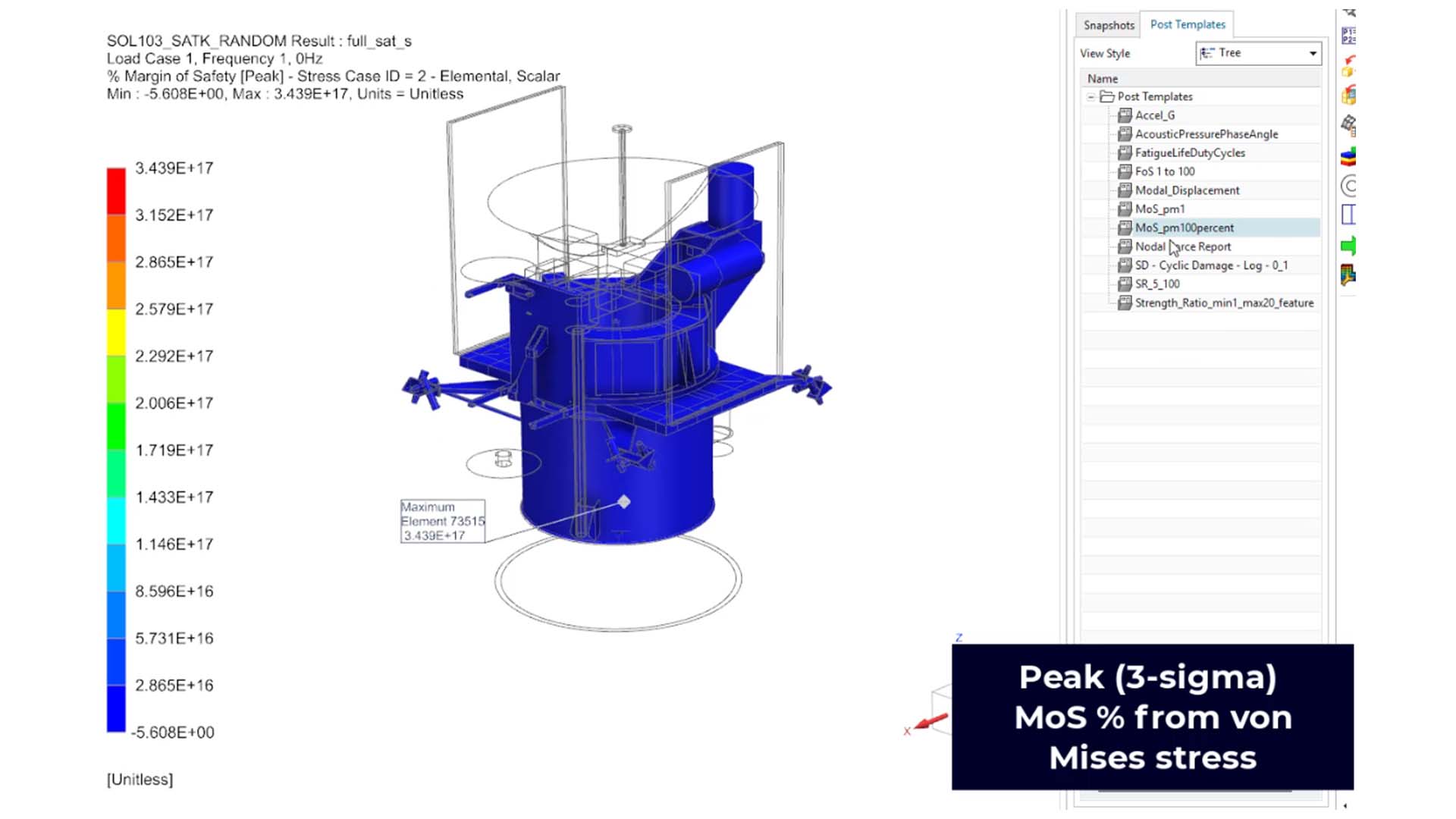
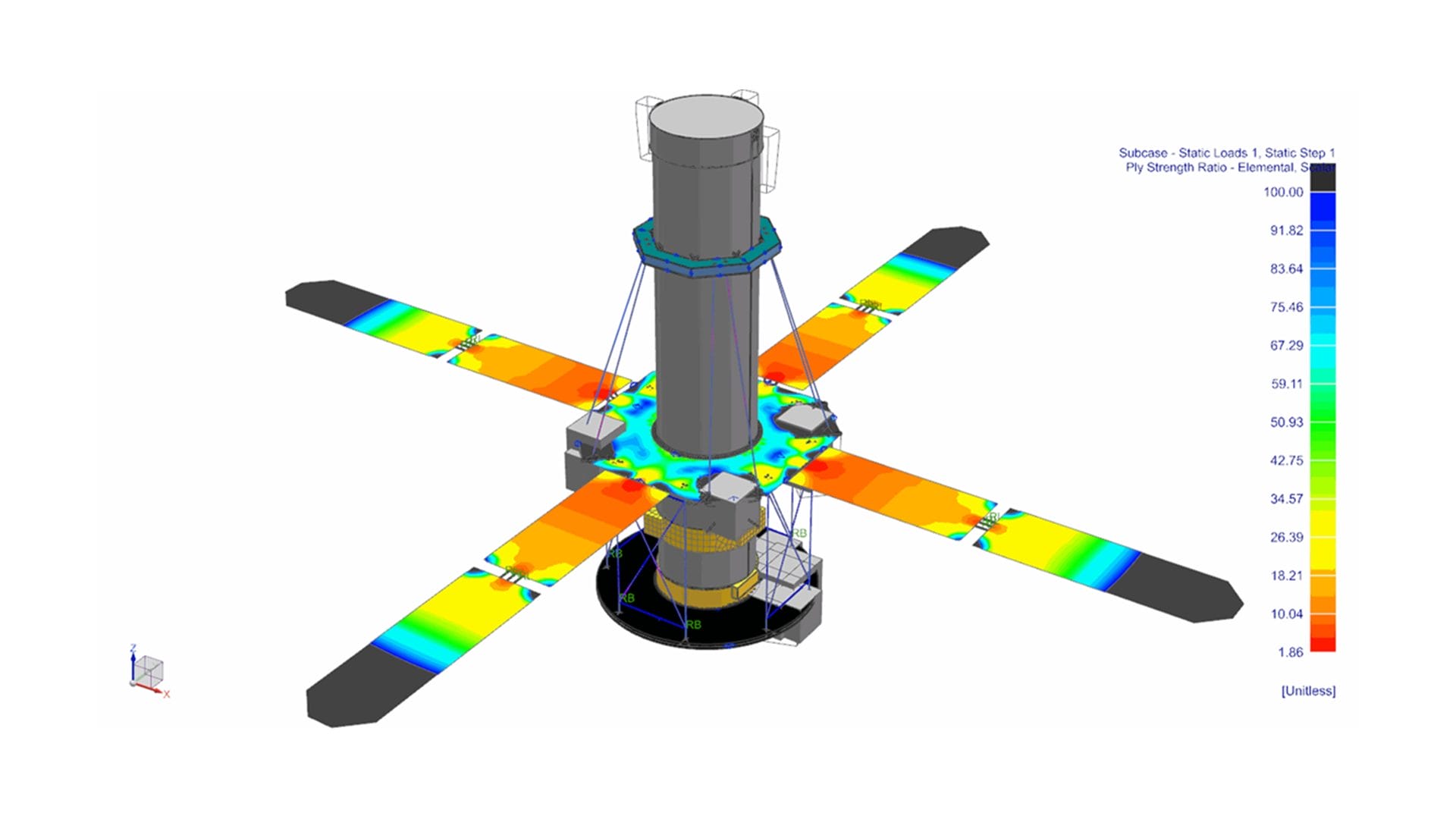
- Reads Nastran results and generates detailed reports and new insights, including margin of safety calculations and laminate failure indices.
- 200x faster than and as accurate as Nastran.
- Removes user burden to determine correct or minimal number of spectral lines.
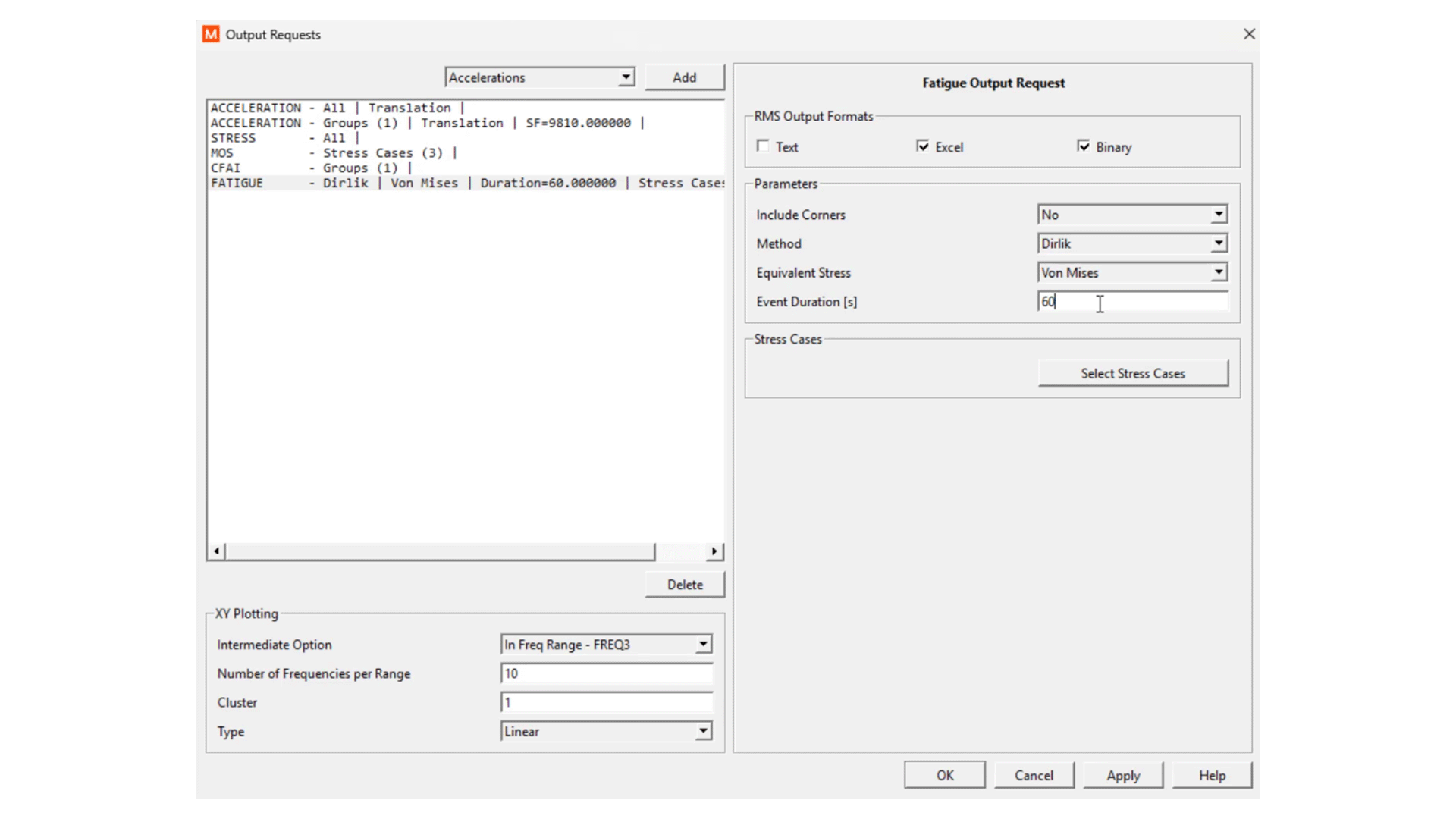
- Computes peak stresses, account for Gaussian distribution, composite failure metrics in addition to peak stress strain, margin of safety, modal summary, stress, element force, and grid-point force
- Works on Windows and Linux.
Integrated structural solvers
Integrated structural solvers for existing finite element platforms, such as Simcenter, enable seamless analysis within established workflows.
- Durability analysis: Specialized solvers capable of conducting SWT, stress-life and strain-life assessments, fatigue failure predictions for welded joints using the British Welding Institute (BWI) method, notch effects. Support for static, transient, random as well as Strain Guage durability. Support for Orthotropic materials, Dang Van fatigue safety factor, biaxial fatigue evaluation, Gerber Mean Stress, Power hardening, as well as plate thickness corrections.
- Laminate analysis: Integrated solvers use classical laminate theory and account for complex anisotropic behaviors, such as sheared fabrics, in laminate analysis. Support zone as well as ply-based modeling. Work with Maximum Stress, Maximum Strain, Tsai-Wu, Hill, Hoffman, Puck, LaRC02, Von Mises, Core Transverse Shear and user defined theories. Reports Envelope ply and load case results and creates graphical and spreadsheet reports.
- Simulation-assisted test: Solvers for collaboration with the Testing Engineer. Pre-Test, Correlation and Model Update. Identify sensor and exciter locations, compare FE Model Shapes (Mode, Operational Deflection and Static Deformation) and Frequency Response Functions. Support for Analysis-Anaylsis and Test-Analysis for Structural, Acoustic and Vibro-Acoustic environments. Allow for user to improve correlation using SOL200 or a wider Heeds based search for preparing a Digital Twin.
Frequently asked questions
What are Maya HTT’s Structural Solvers & SDKs?
Maya HTT’s Structural Solvers & SDKs include standalone and integrated structural solvers designed for fast performance and advanced functionality. They help engineering teams perform specialized structural analysis within either dedicated solver workflows or existing finite element platforms.
Are Maya HTT’s standalone structural solvers based on Nastran?
Yes. Maya HTT’s standalone structural solvers are built on top of Nastran. They are designed to enhance the performance of existing Nastran-based features and add advanced structural analysis capabilities.
What does Maya HTT’s Structural Analysis Toolkit, or SATK, do?
Maya HTT’s Structural Analysis Toolkit, or SATK, reads normal modes calculated by Nastran SOL103 analysis and performs random vibration response calculations more efficiently than traditional Nastran methods. It can also read Nastran results, generate detailed reports, and provide insights such as margin of safety calculations and laminate failure indices.
How fast are Maya HTT’s structural solvers compared with Nastran?
Maya HTT’s standalone structural solver technology is up to 200x faster than Nastran while maintaining the same accuracy. It removes the user burden of determining the correct or minimal number of spectral lines.
Can Maya HTT’s structural solvers be integrated into existing finite element platforms?
Yes. Maya HTT offers integrated structural solvers for existing finite element platforms, such as Simcenter, enabling engineers to perform specialized analyses within established workflows. Applications include durability analysis, laminate analysis, and simulation-assisted testing.