
Altair PhysicsAI.
Combining AI with engineering simulation to predict complex physical behaviors
AI meets Engineering
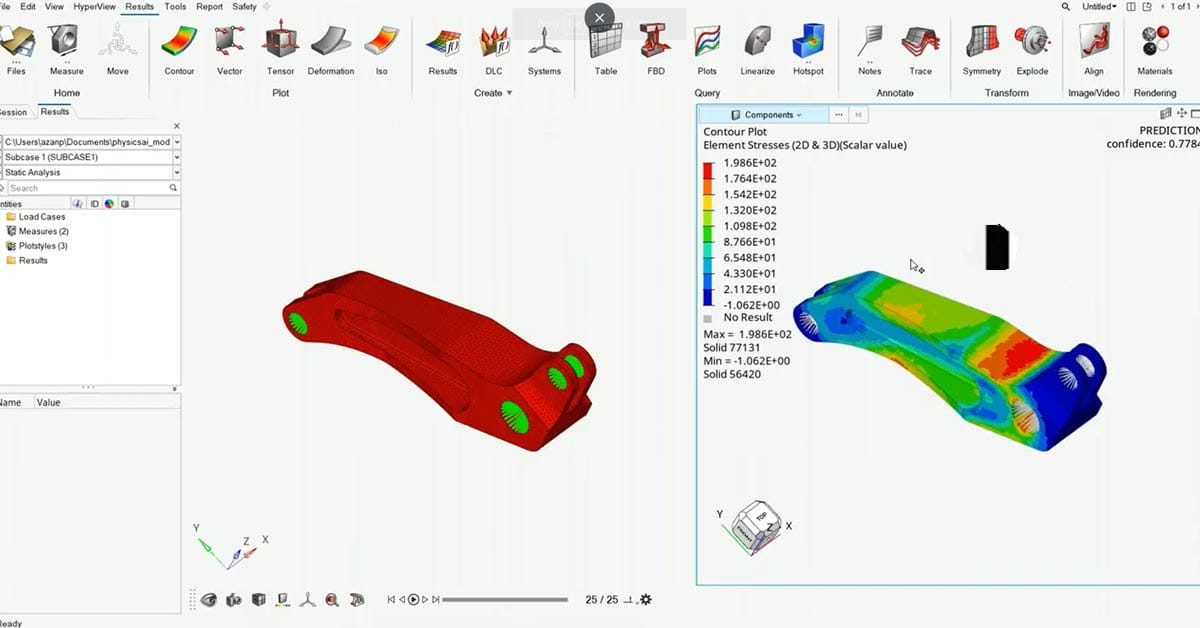
Altair PhysicsAI combines AI with engineering simulation to predict complex physical behaviors using trained models.
It learns from historical simulation and test data to forecast results such as stress, strain, displacement, temperature, and pressure distributions almost instantly.
By reducing reliance on repetitive solver runs, it helps teams explore and optimize designs faster and more intelligently.
Geometric deep learning built for engineering
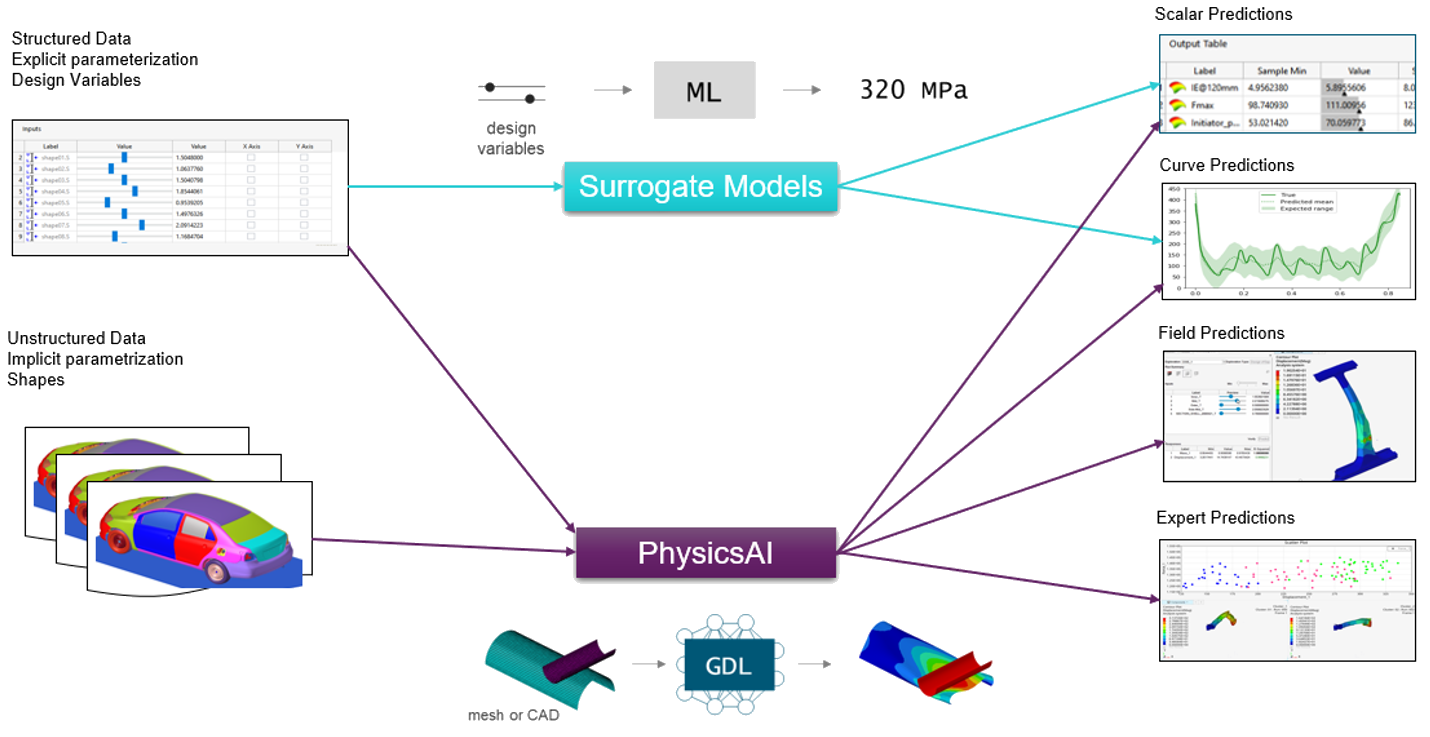
Altair PhysicsAI applies geometric deep learning to mesh and CAD data, learning how geometry changes affect physical outcomes.
This domain-aware approach captures structural, thermal, and fluid behaviors without manual feature engineering.
Solver-neutral and data-flexible
Train Altair PhysicsAI using data from any solver (e.g., OptiStruct, Radioss, Abaqus), and make predictions independently of the original software.
Gain the flexibility to repurpose years of archived simulation results into a predictive modeling asset.
Ultra-fast prediction for design exploration
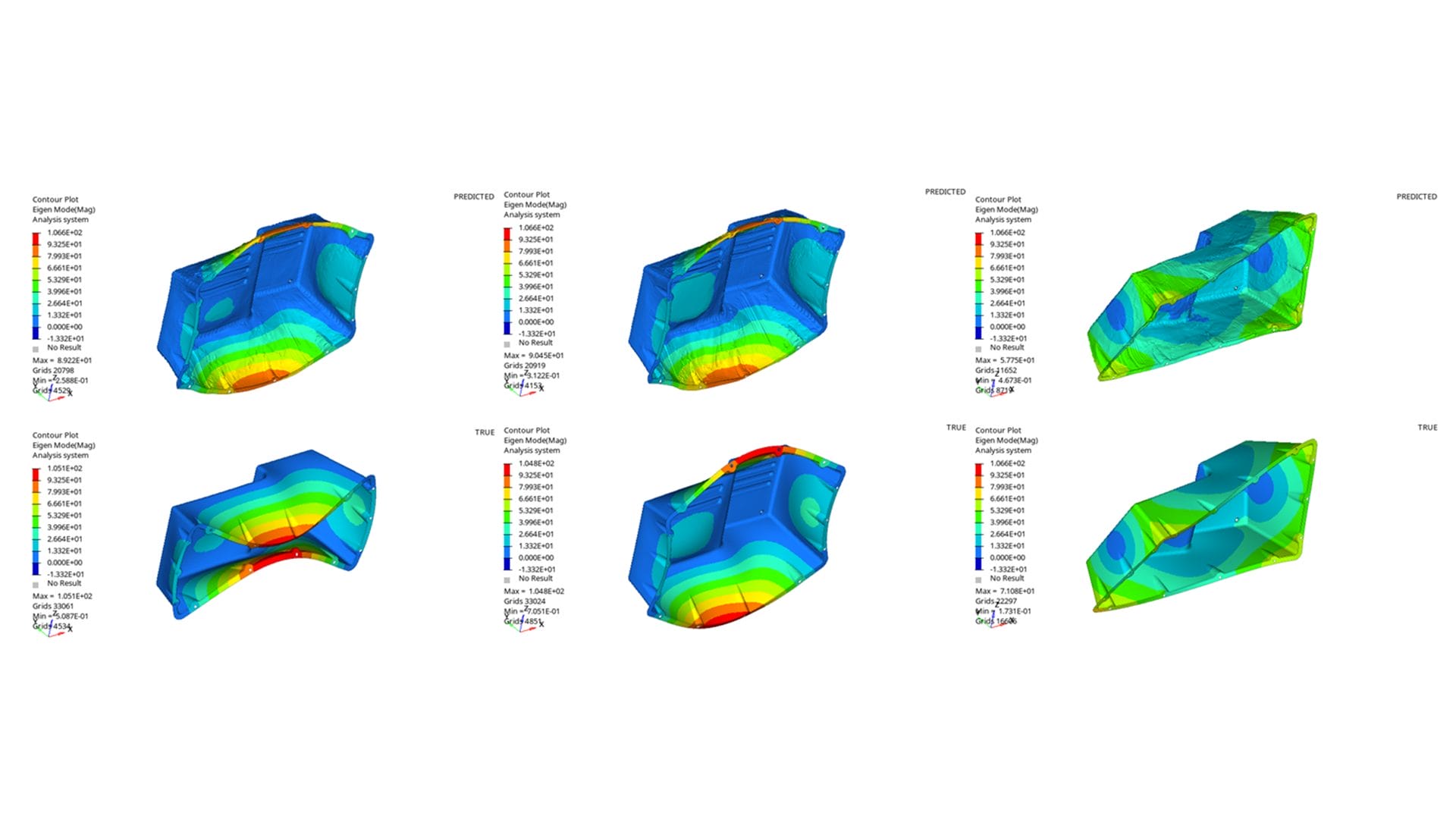
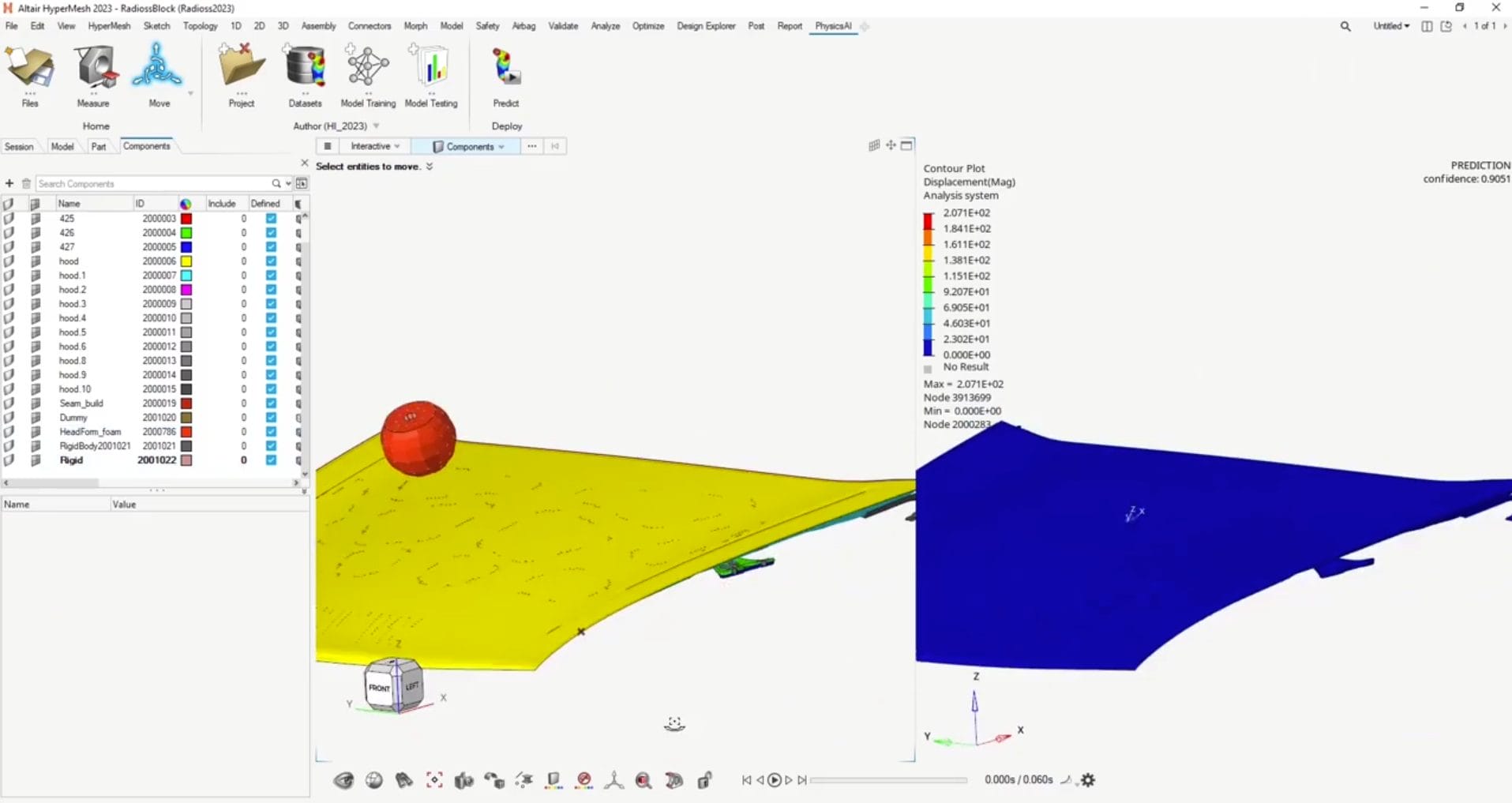
Altair PhysicsAI produces full-field predictions for stress, displacement, strain, temperature, and more within seconds, often 1,000 times faster than traditional solvers.
Engineers can evaluate hundreds of geometry variants early in the design process without consuming HPC resources.
Confidence metrics and outlier awareness
Each prediction includes similarity and confidence scores that quantify how closely a new geometry matches the training data.
Built-in outlier detection ensures users know when to trust AI predictions and when to fall back on a full solver run.
Embedded integration across the Altair platform
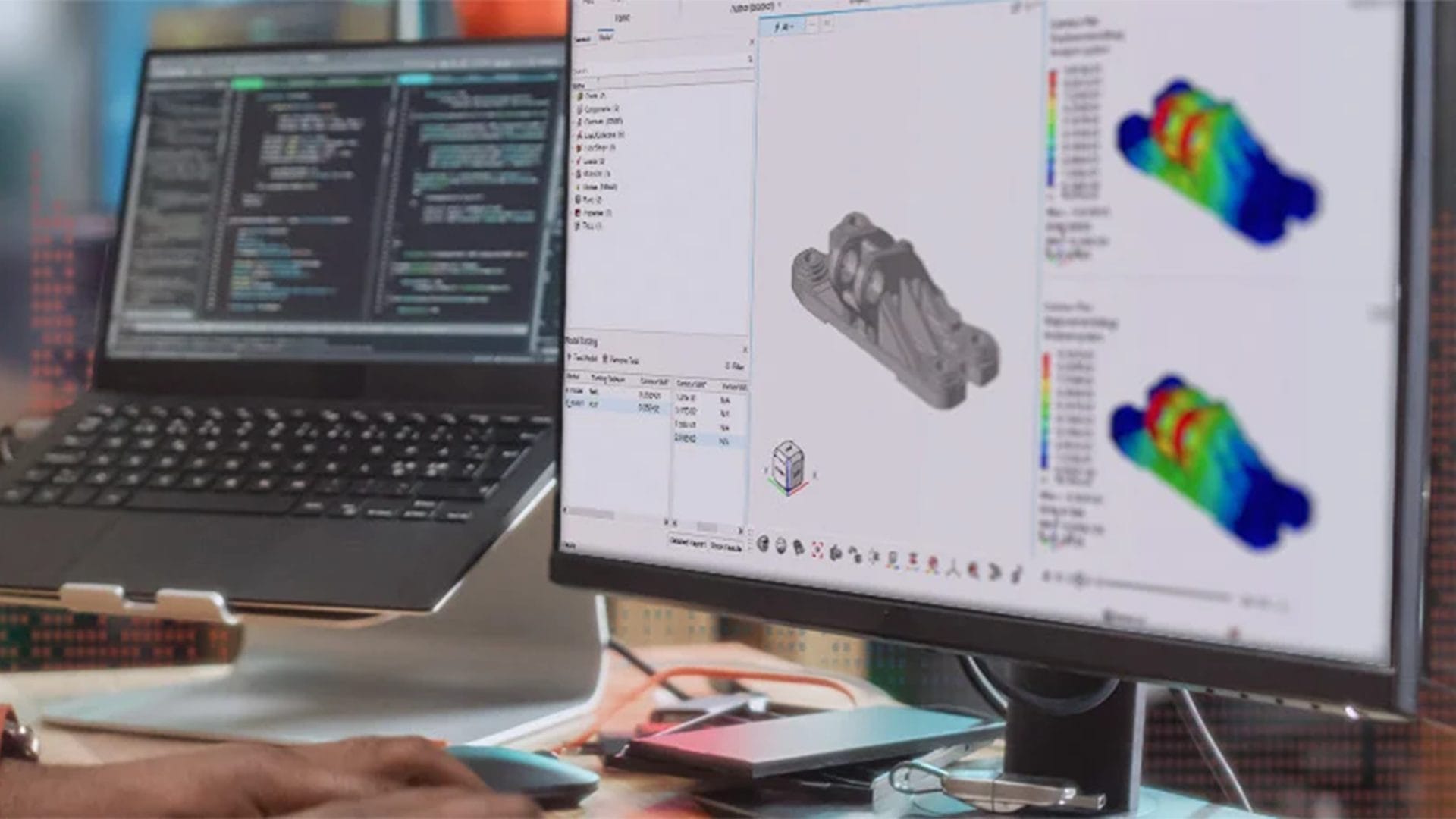
Altair PhysicsAI operates natively, bringing AI-augmented prediction directly into existing Altair workflows.
This tight integration makes it simple for teams to adopt AI without disrupting established simulation processes.