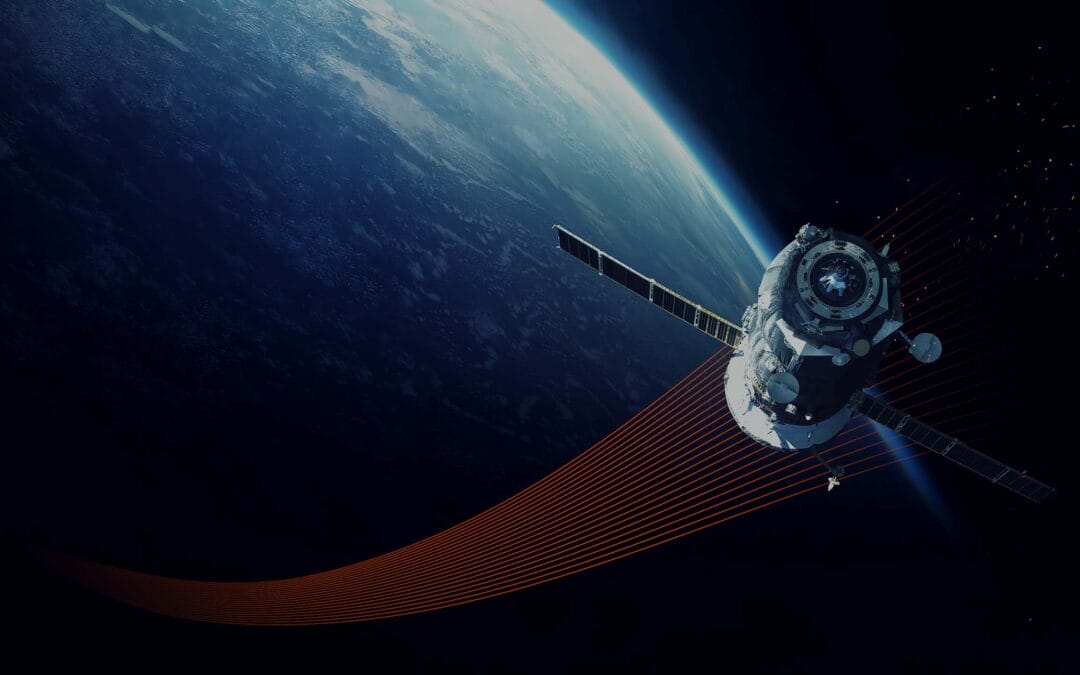
It’s a novel idea: move an activity known for its need for energy and cooling into an environment known for extremely cold temperature and high-intensity solar energy.
Is it the stuff of sci-fi fiction? Perhaps. But the topic is most certainly gaining momentum.
By 2030, data centers are projected to account for nearly 9% of total electricity consumption in the United States, driving concerns over energy availability, sustainability, and cooling infrastructure.
Deploying data centers into space could be a perfect solution to a growing problem.
After all, space provides continuous access to high-intensity solar energy and a convenient way to dissipate heat. With declining launch costs and rising energy prices thrown into the mix, it’s no surprise that industrial interest in orbital data-processing infrastructures is getting serious.
Questions of “should we?” aside: would it be possible?
Despite these apparent advantages, the primary challenge lies in energy management.
Modern data centers consume vast amounts of electrical power while dissipating equally significant thermal loads. In space, this translates into large solar arrays for power generation and extensive radiator surfaces for heat rejection.
The resulting system mass and size introduce efficiency penalties, cost increases, and scalability challenges. Any credible solution must therefore balance power generation, thermal control, mass, and cost while remaining modular and scalable.
A Bitcoin mining case study
This webinar presents our investigation into the feasibility of space-based data centers through a focused case study: a space station dedicated to Bitcoin mining.
This application represents an extreme but well-defined use case, characterized by high power density, continuous operation, and minimal data latency constraints. The analysis combines our terrestrial experience in the thermal management of large-scale Bitcoin mining facilities with our extensive expertise in spacecraft thermal design.
Using a Model-Based Systems Engineering (MBSE) framework, coupled with multidisciplinary optimization and Physics-AI-driven analysis, we performed initial system sizing and defined a preliminary thermal architecture.
The study evaluates power generation requirements, heat rejection strategies, and key design trades impacting scalability and cost. The results provide insight into the technical challenges and potential pathways toward viable orbital data-center architectures, highlighting the role of integrated thermal and power system design in enabling future space-based computing infrastructure.