With (most) F1 teams running in Barcelona last week for the first of two shakedowns, fans finally got a look the 2026 regulation cars. While some details of the aerodynamic packages were not fully visible from the limited available footage, one part that caught my eye is the front wing endplate and the strakes and winglets teams fitted (or chose not to).
If you are new to this series, be sure to check out our previous posts: F1 2026: Dirty air — often talked about, now visualized and Chasing 400 km/h: How fast will the 2026 F1 cars be?
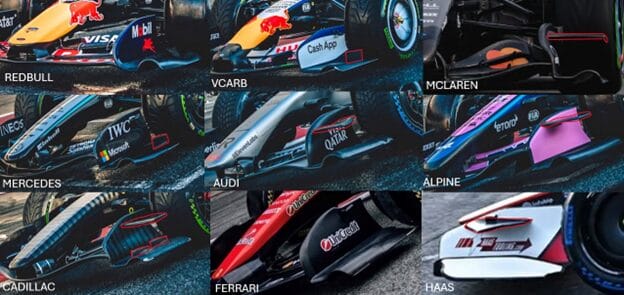
Front wings of F1 teams at shakedown in Barcelona Source: F1, Sport 360
Aerodynamic purpose
The purpose of these elements (or the lack thereof) is to control the squish and wake of the front tyre and to feed “clean” high energy air to the downstream aerodynamic components. They achieve this by generating vortices. Below is the simplified effect expected from each geometry I decided to run.
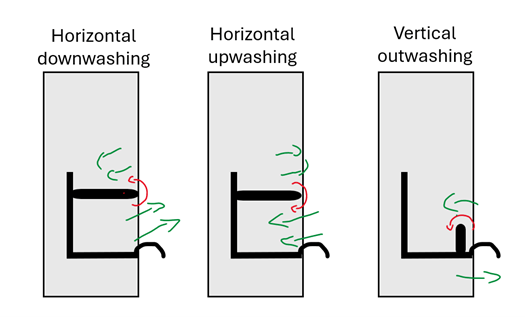
Mechanisms leveraged by each geometry
Geometry and CFD analysis
With the 2026 regulation parametric concept, it was a matter of minutes to add diveplanes and strakes to the front wing and re-run the simulation. In total, four geometries were analysed.
- No strakes or diveplane as baseline (Ferrari-Redbull-Aston)
- Horizontal downwashing diveplane (McLaren)
- Horizontal upwashing diveplane (Audi-Alpine)
- Vertical outwashing strake (Mercedes-VCARB)
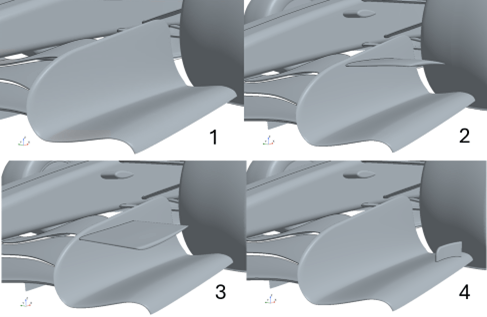
Studied geometries
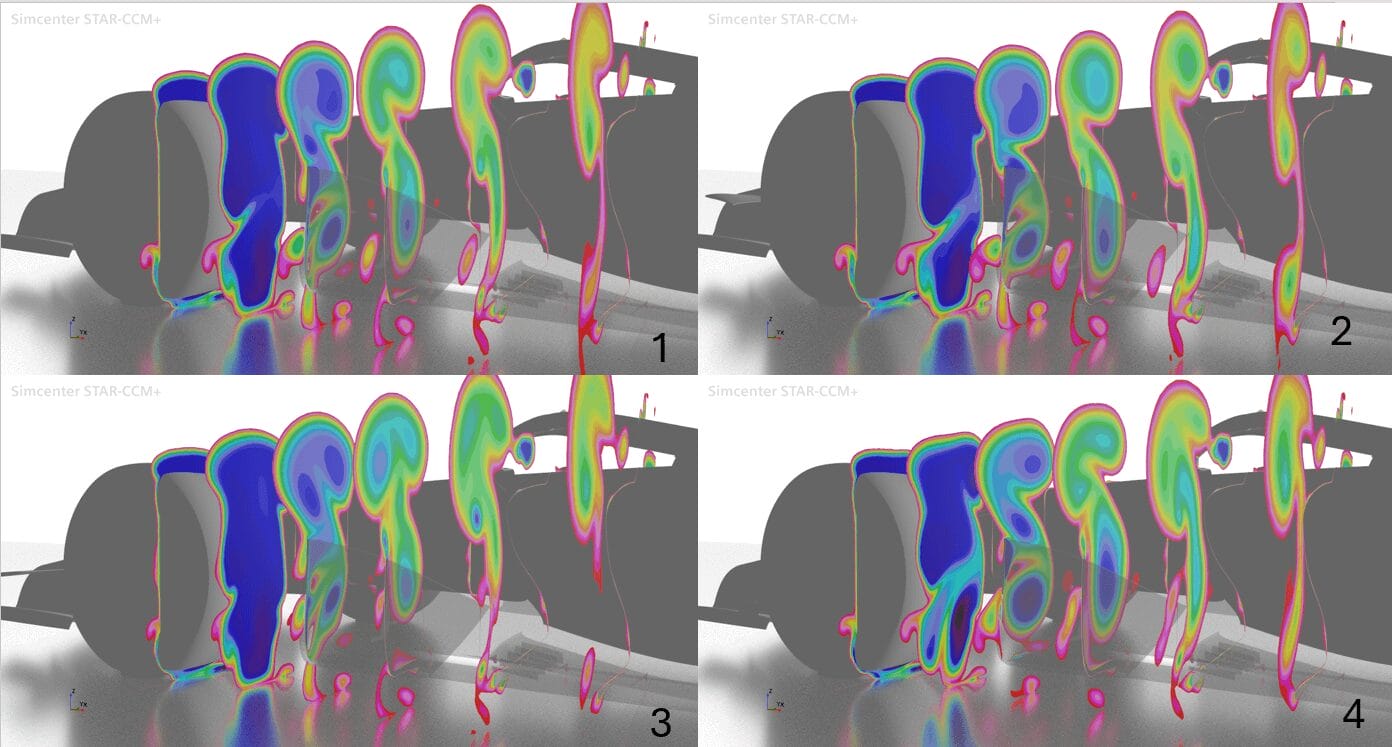
All results have #1 as a baseline. One important disclaimer before going on with the analysis is that the teams chose these geometries in conjunction with the design of the rest of the car. While comparing it here gives insight into what the element achieves, some interactions will be missing, and the full picture will not be captured.
The vortices shed by the horizontal elements are easy to distinguish, whereas the vertical element does not seem to have its own isolated lasting vortex.
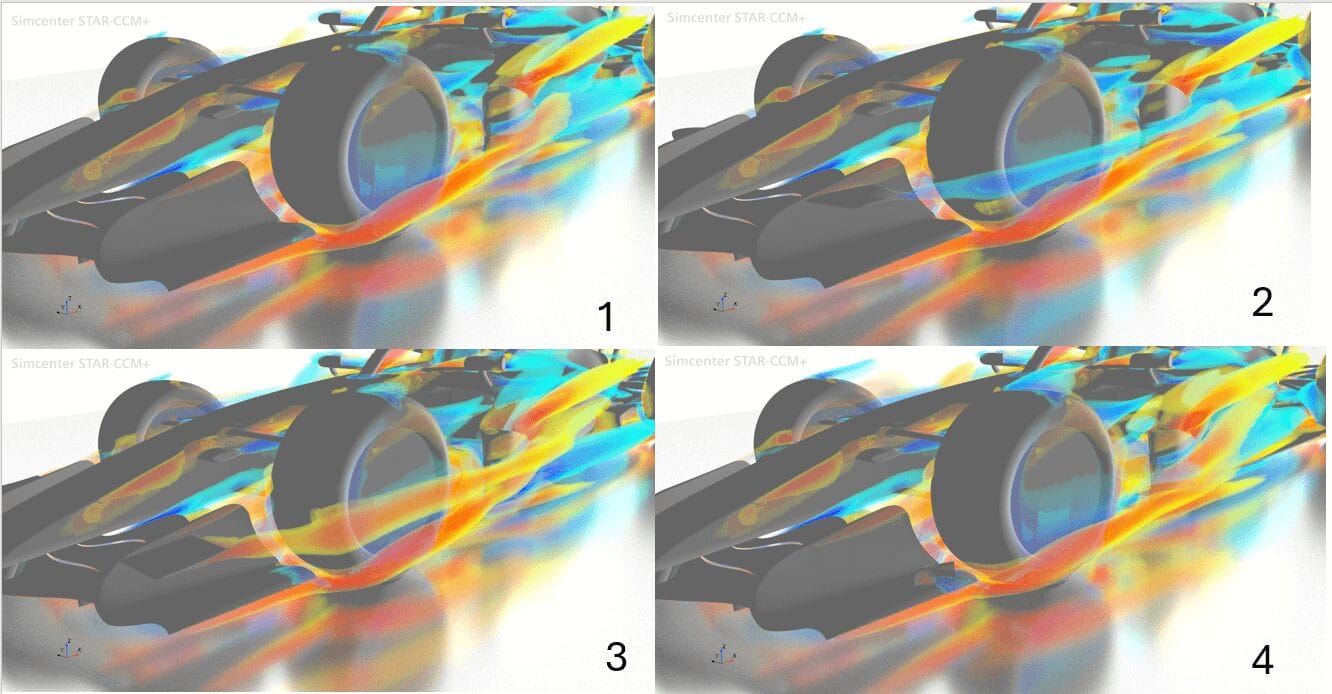
Helicity across baseline and concept 2, 3,4. Orange is clockwise, blue is counterclockwise
These vortices cause a significant change in the flow field downstream. One of the many ways to visualize it is to compare the solution at cut planes for helicity, total pressure coefficient as well as the y and z velocity components. In all cases, red denotes an increase, and blue a decrease.
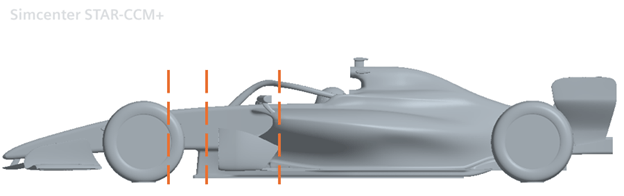
zy planes selected to compare solution
Starting with concept 2 we can see that tyre attachment is improved in the lower right and top left corner of the tyre. The pockets of air with improved total pressure coefficient (CPT) then get clocked in the lower half towards the sidepod, while poorer CPT air gets clocked out in the upper half of the wake.
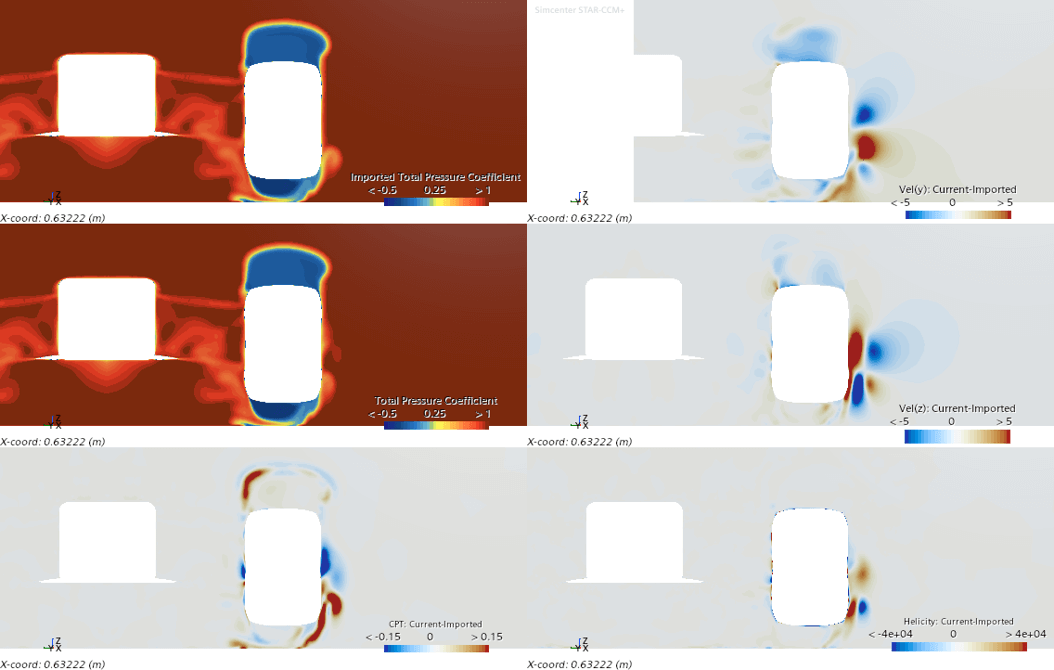
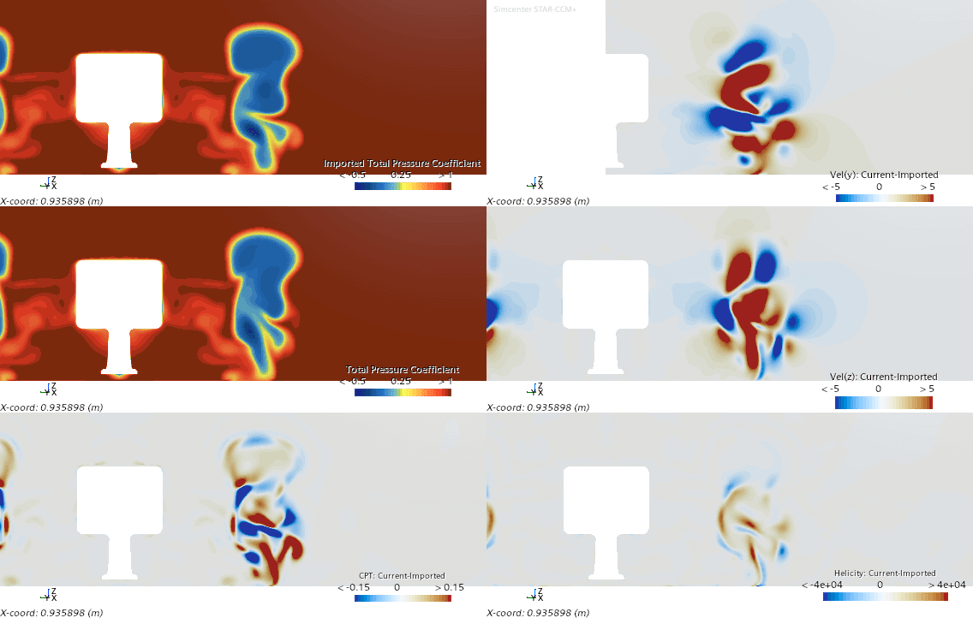
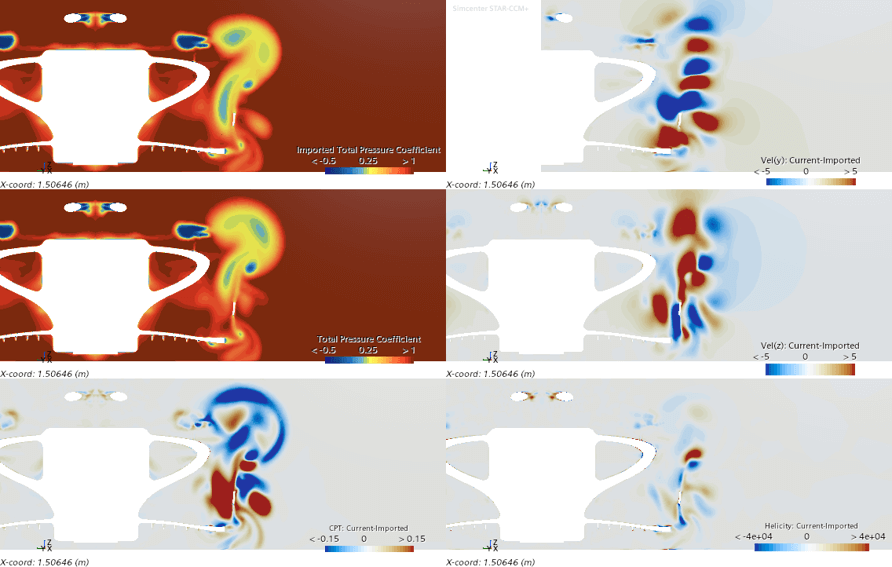
In concept 3, with a helicity structure opposite to the one in concept 2, the CPT benefit comes on the opposite corners of the tyres. This comes with the benefit of improved CPT along the floor edge as well as increased outwash and upwash along the floor edge. However, it also sends poor flow into the floor/sidepod undercut.
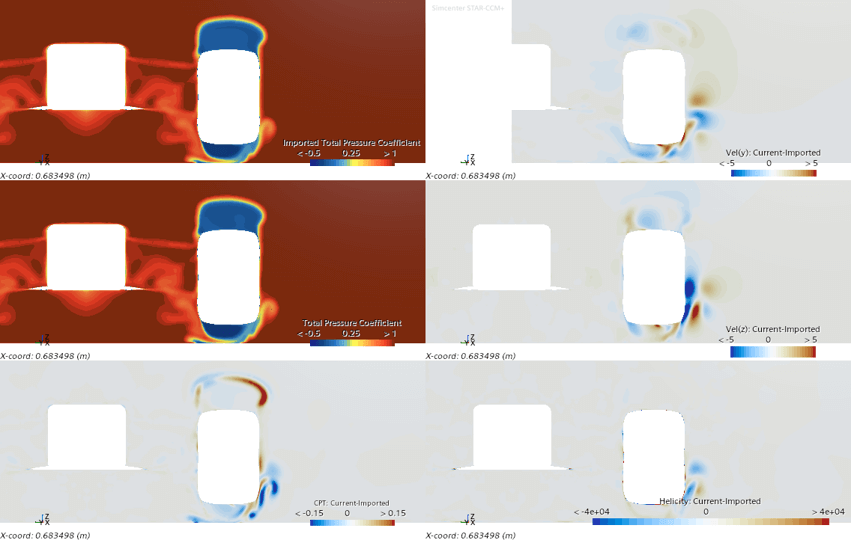
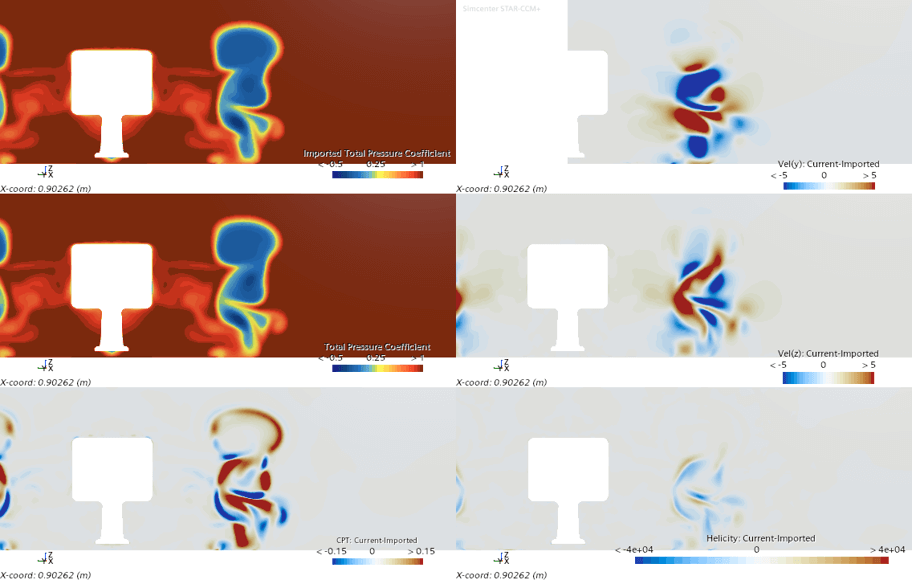
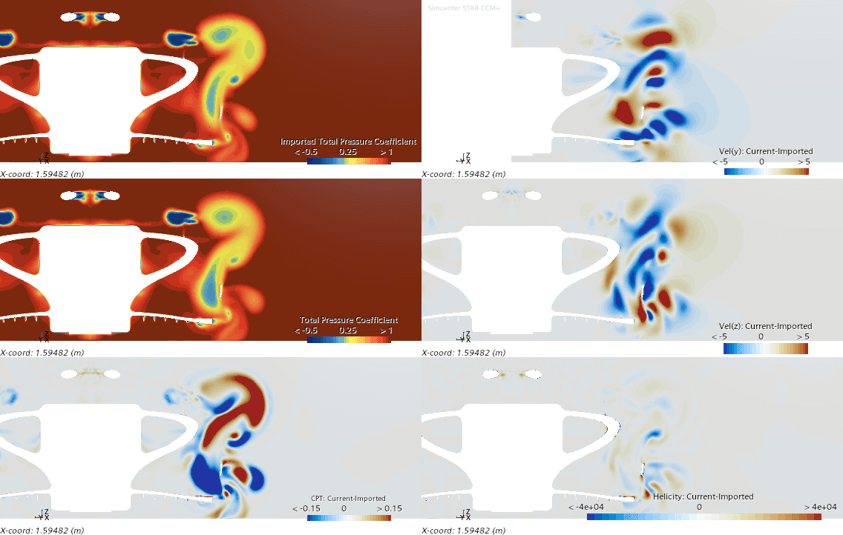
Concept 4 exhibits similar differences from baseline as concept 3 in the first cut, but then lower CPT pocket is sent upwards quicker. The gain in CPT close to the floor edge does not come with increased outwash along the floor edge
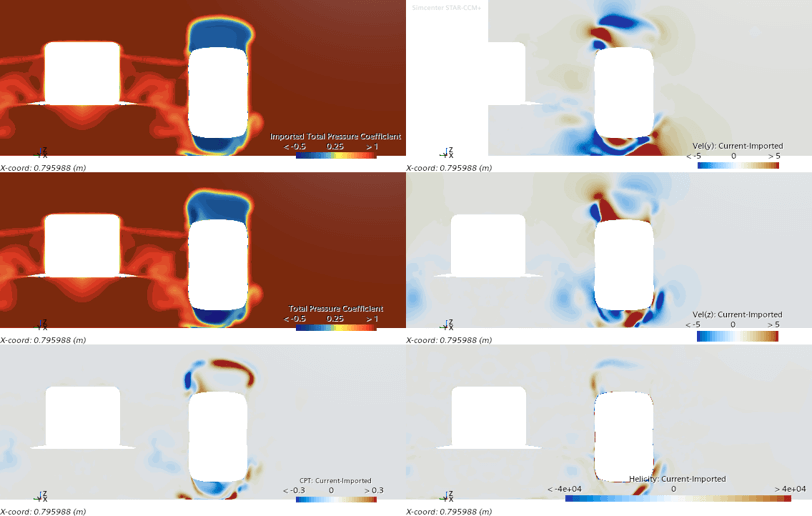
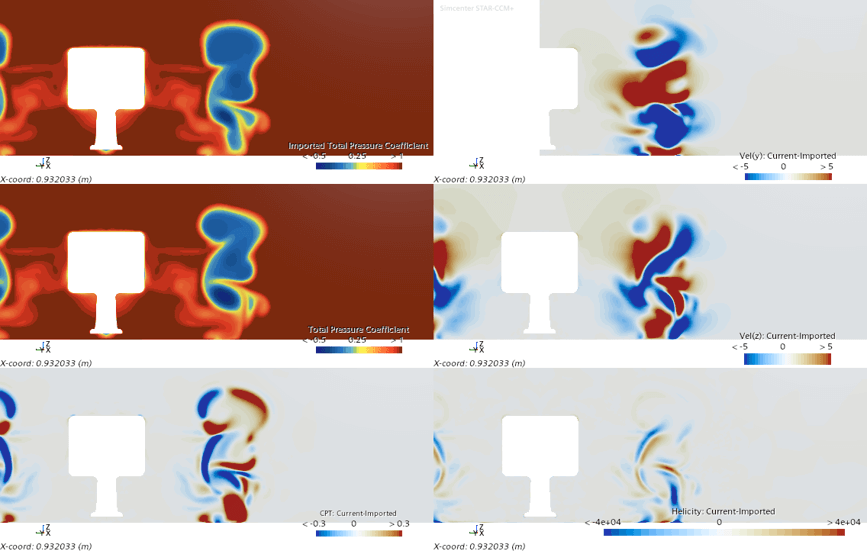
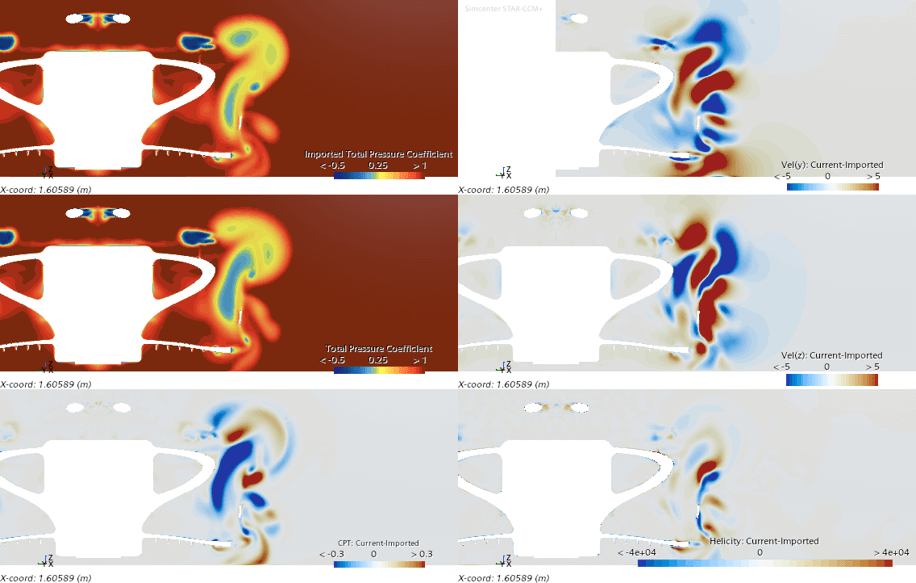
All the concepts reshape the front wheel wake in their own way. There is no clear winner, especially when considering teams all have different front wing and bargeboard geometry. While keeping the endplate free of any strake might be the way to go, there is a strong chance that Aston, RedBull and Ferrari simply want to retain a competitive edge longer.
In any case here is a last side by side comparison of the wheel wake for the four studied concepts.
Conclusion
It’s interesting to see teams taking different design directions and it will be even more interesting to see how these concepts perform and evolve over the next few weeks. We would love to hear your thoughts on the design choices different teams have made and are more than open to suggestions for other analysis.
Interested in exploring your own design challenges?
Get in touch with our team to see how simulation-driven insights can guide your next innovation.