Computational Fluid Dynamics Services.
Improving aerodynamics, heat transfer, and turbomachinery
Incompressible and compressible flows
Design optimization: Whether it’s optimizing pipe networks or enhancing airfoil performance, benefit from incompressible and compressible flow analysis.
Custom simulations: Understand flow behavior, pressure distribution, and lift/drag forces.

Flow regimes
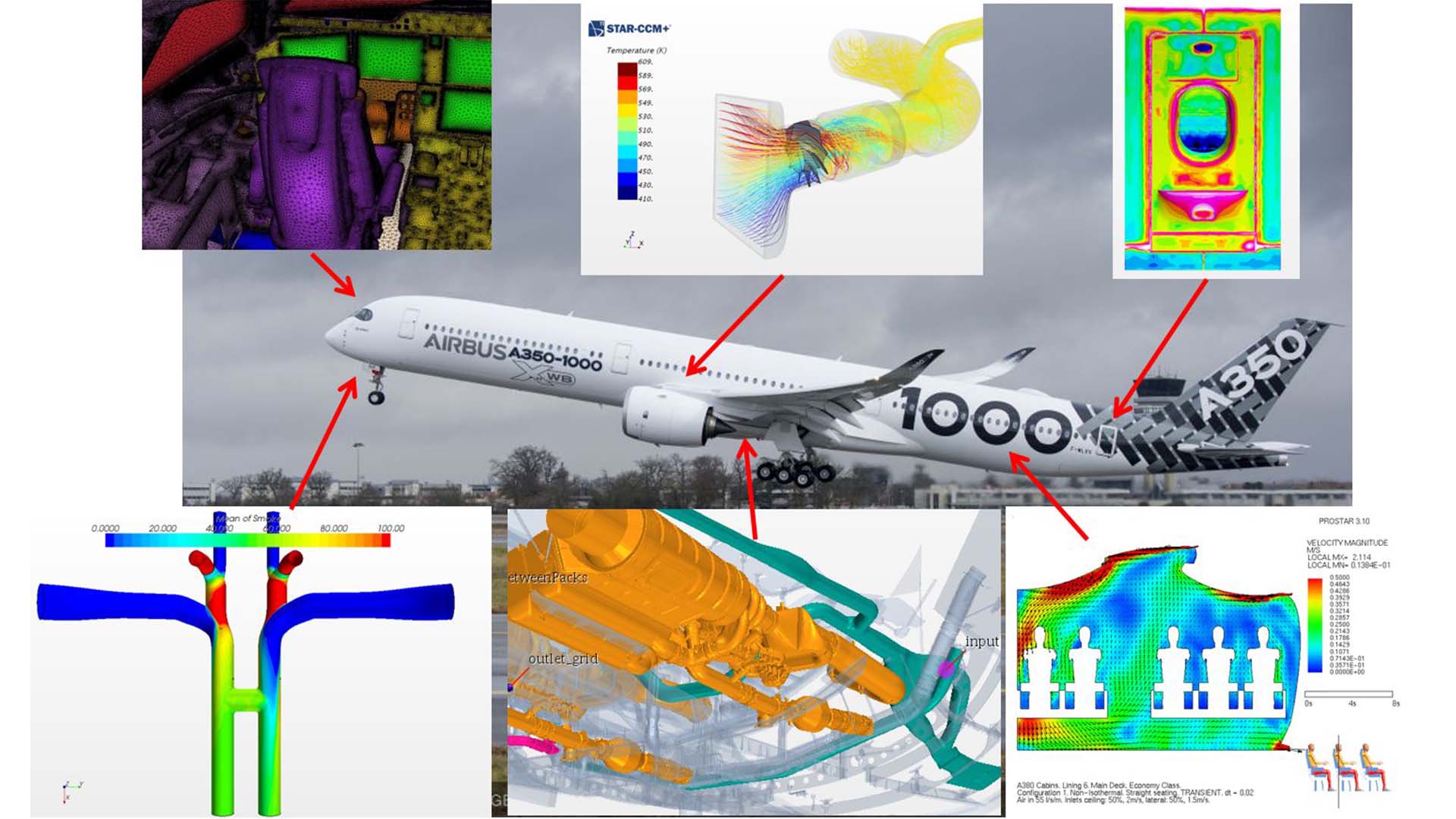
Aircraft design: Get help designing efficient wings, fuselages, and control surfaces for subsonic aircraft
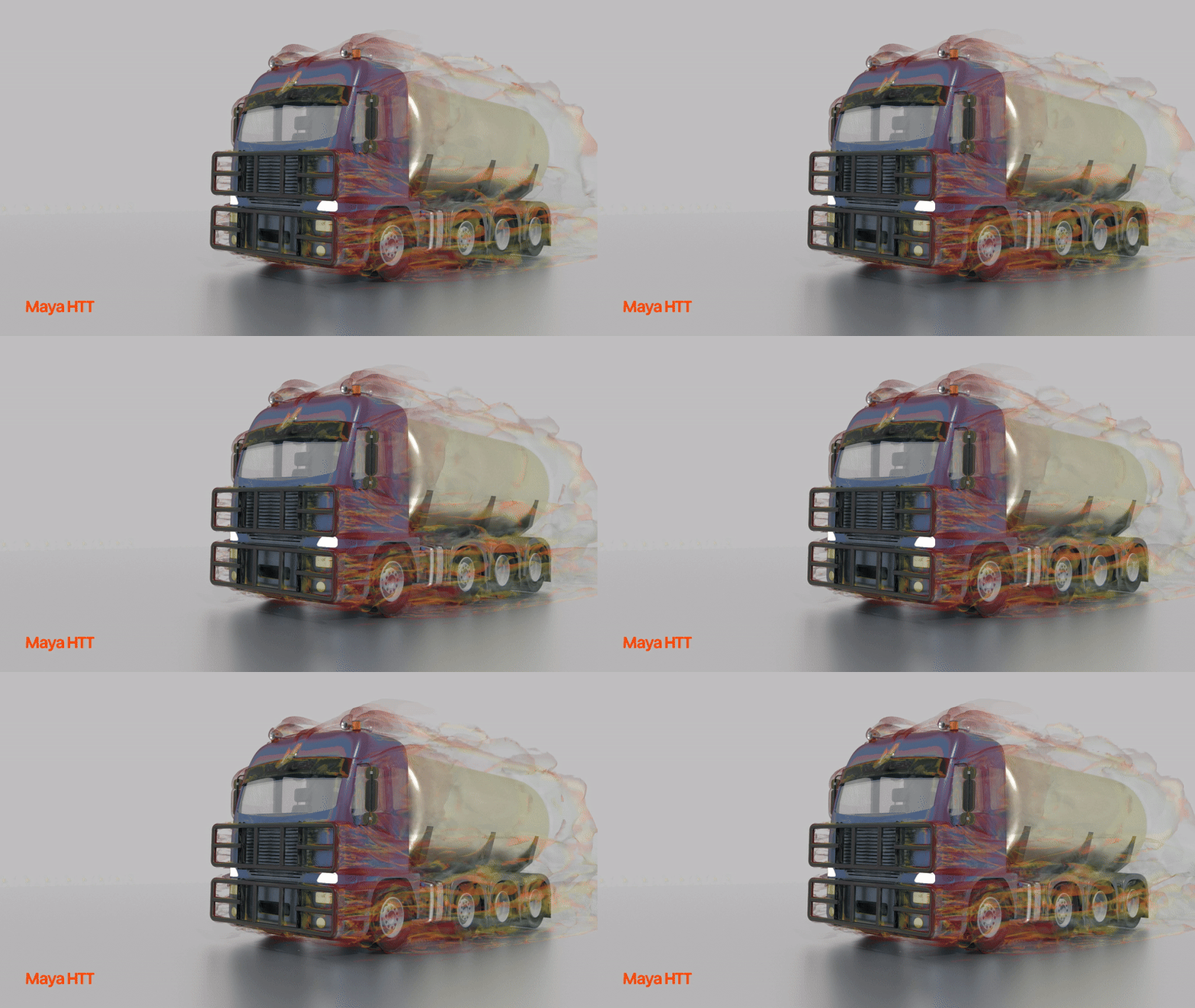
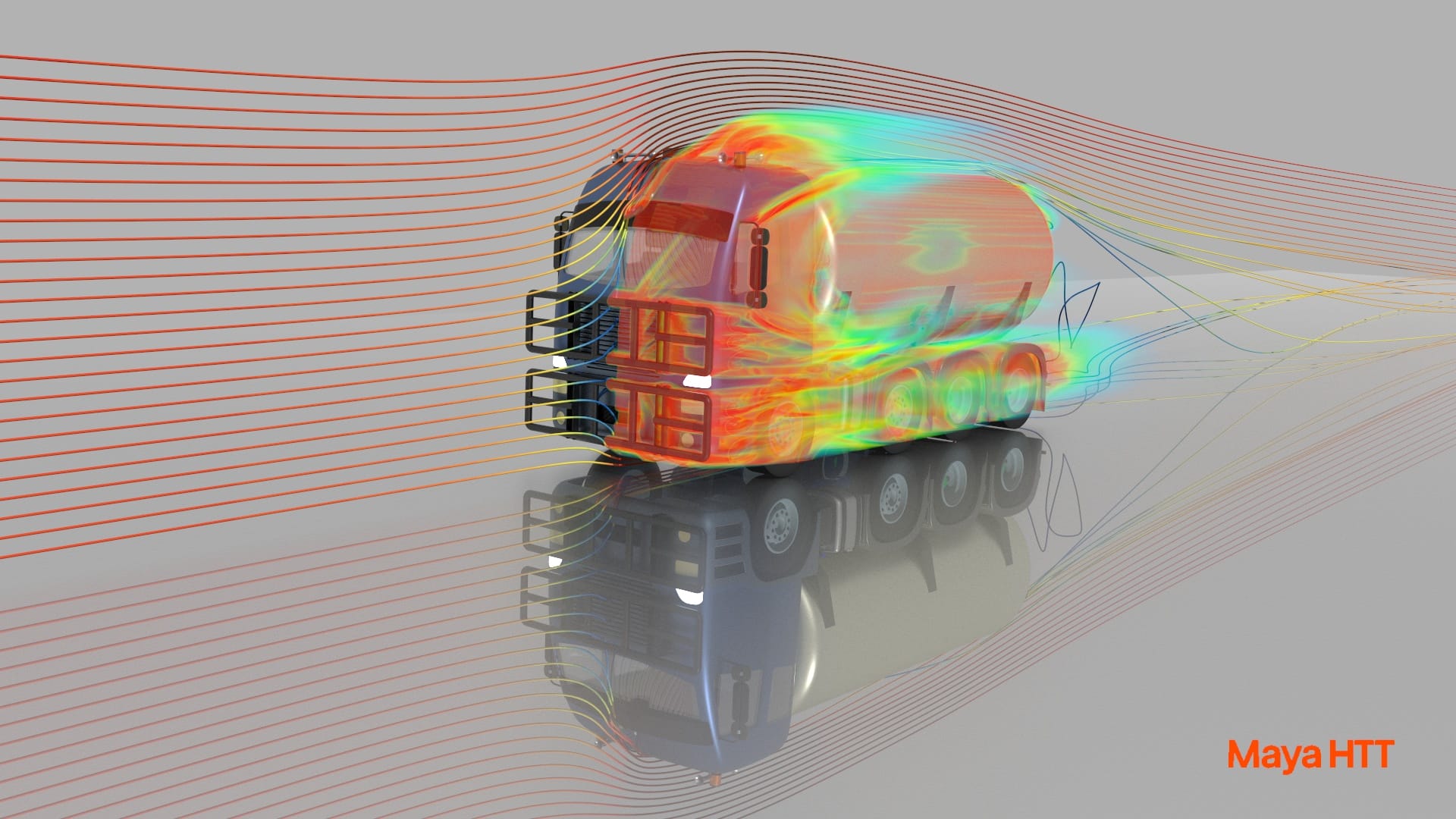
Automotive aerodynamics: Enhance vehicle fuel efficiency by optimizing airflow around cars and trucks.
Supersonic vehicles: From missiles to spaceplanes, gain insights into transonic and supersonic flow phenomena.
Improving aerodynamics, heat transfer, and turbomachinery
Aerothermal analysis
Vehicle aerothermal: Ensure efficient cooling of vehicles while minimizing drag forces. Benefit from our experience working with Formula 1 teams and vehicle manufacturers; we have a wide range of expertise in aerothermal applications.
Hypersonic vehicles: We analyze heat transfer and thermal protection for hypersonic flight.
Energy sector: Optimize turbine blades, combustion chambers, and heat exchangers.
Environmental impact: Study turbulent flows in rivers, oceans, and urban environments.

Turbomachinery solutions
Gas turbines: Improve efficiency and reliability of gas turbine engines.
Pumps and compressors: Enhance performance, reduce energy consumption, and analyze cavitation in pumps.
Quieter designs: Minimize noise in aircraft, wind turbines, vehicles and industrial fans.
Heat transfer and radiation
Conjugate heat transfer (CHT): Solve complex CHT problems, considering both fluid and solid regions. Account for conduction, convection, and radiation heat transfer, whether you need to optimize cooling systems or designing efficient heat exchangers.
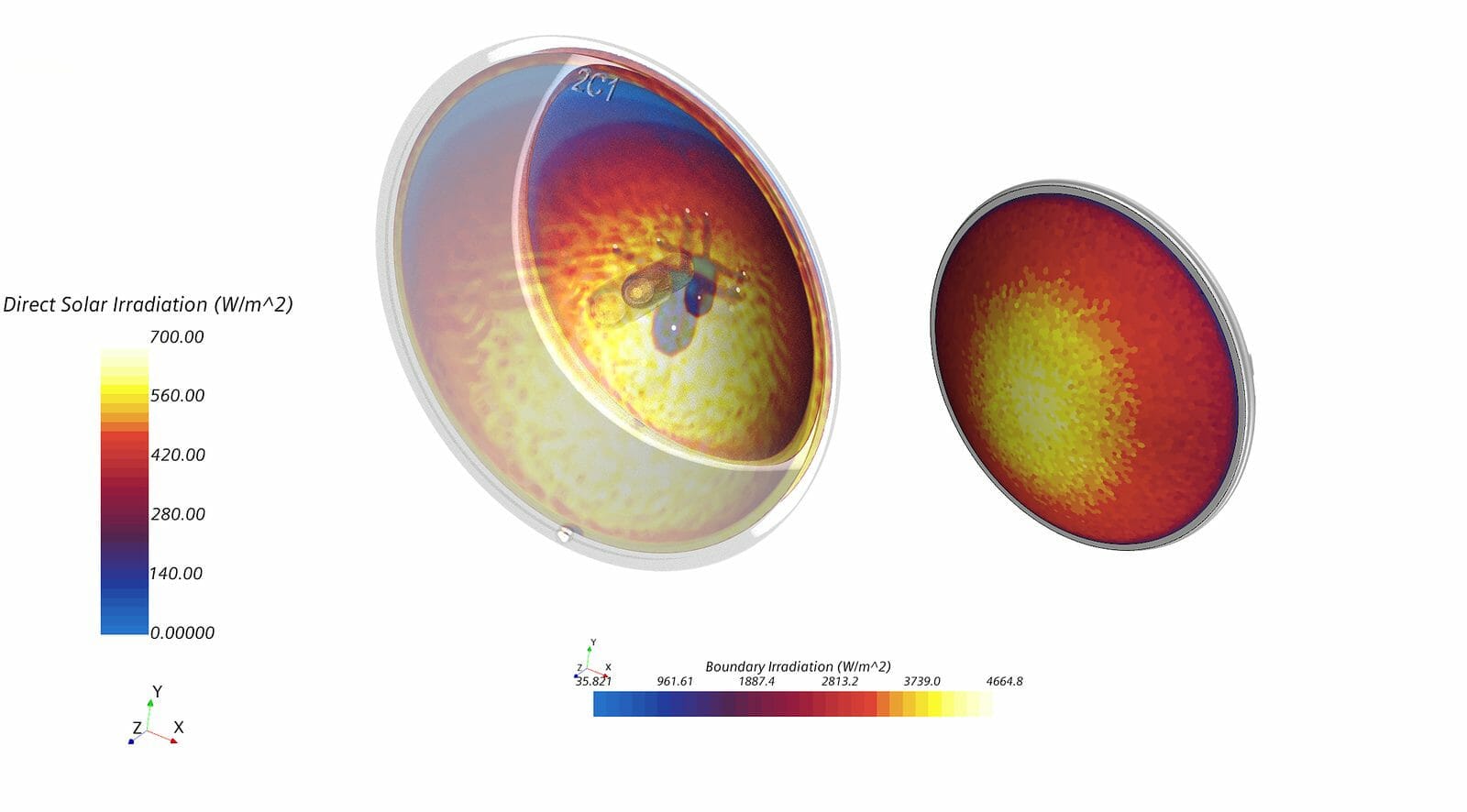
Radiation modeling: Accurate radiation modeling is crucial in various applications, from solar energy systems to spacecraft thermal control. Benefit from simulations that incorporate surface-to-surface radiation effects, ensuring precise predictions.
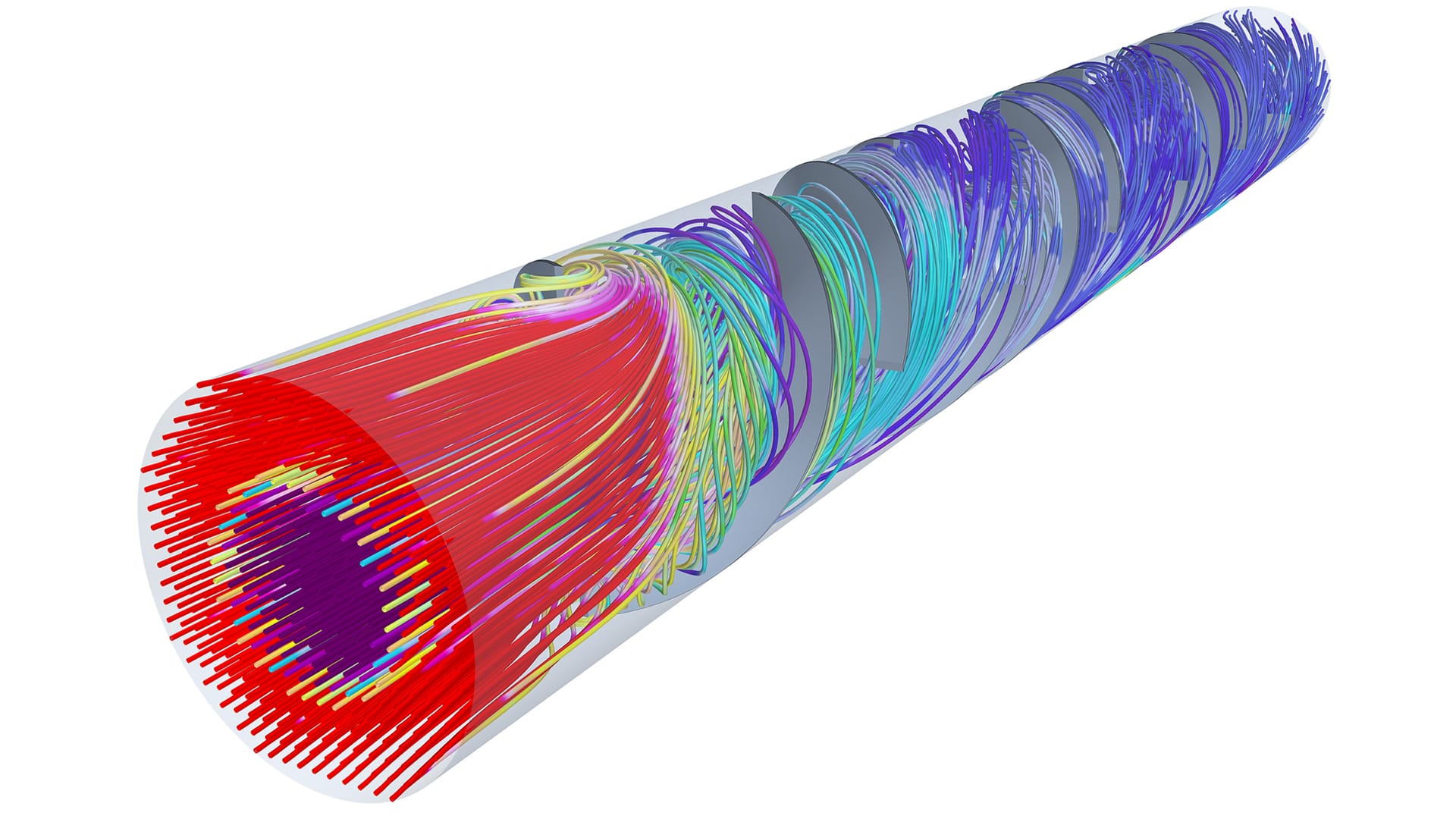
Multiphase and hybrid flows
Free surface modeling: Tackle challenging scenarios involving free surfaces, such as sloshing in tanks or ship hydrodynamics, and capture dynamic interfaces and fluid behavior.
Discrete element method (DEM): For bulk material simulations, whether granular flows in mining equipment or particle-laden flows in chemical reactors, DEM provides insights.
Non-Newtonian and slurry flows: Analyze viscosity variations, shear-thinning behavior, and particle interactions.
Spray modeling: From fuel injectors to agricultural sprayers, the Lagrangian particle approach accurately predicts spray dispersion and droplet behavior.
Phase change: Study phase transitions in diverse contexts, whether it’s boiling, condensation, or solidification.
Reacting flows and combustion
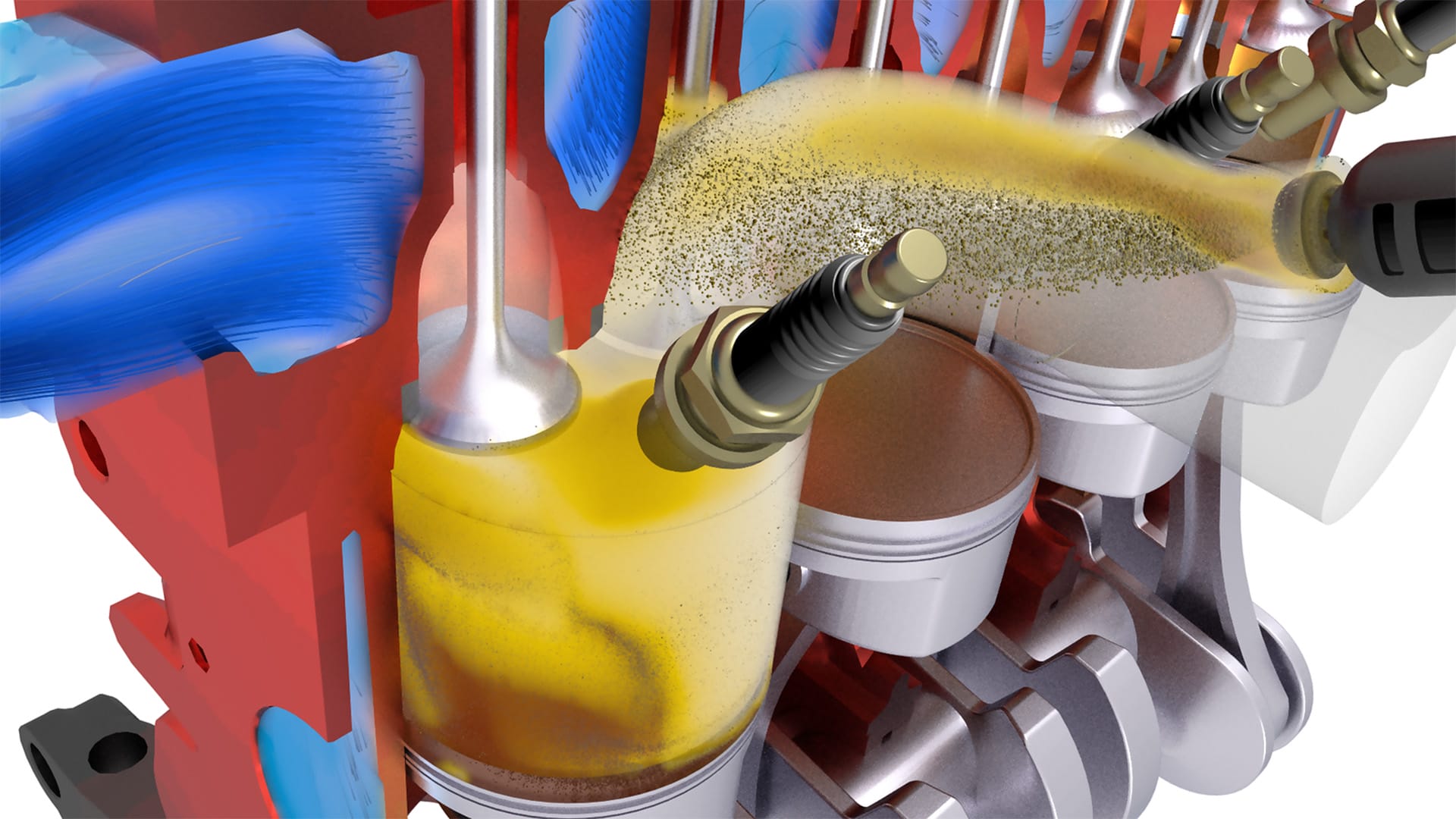
Combustion analysis: Benefit from simulations of combustion chambers, gas turbines, and internal combustion engines, and models of species transport, chemical reactions, and flame dynamics.
Reaction kinetics: Understanding reaction rates and species concentrations is critical for optimizing combustion processes.
Multiphysics and kinematics
Fluid-structure interaction (FSI): Couple fluid dynamics with structural mechanics, considering deformations, stresses, and vibrations. Applications range from flexible wings to blood flow in arteries.
Dynamic fluid-body interaction: Benefit from simulations that handle moving boundaries, such as fluttering flags or flexible membranes in pumps.
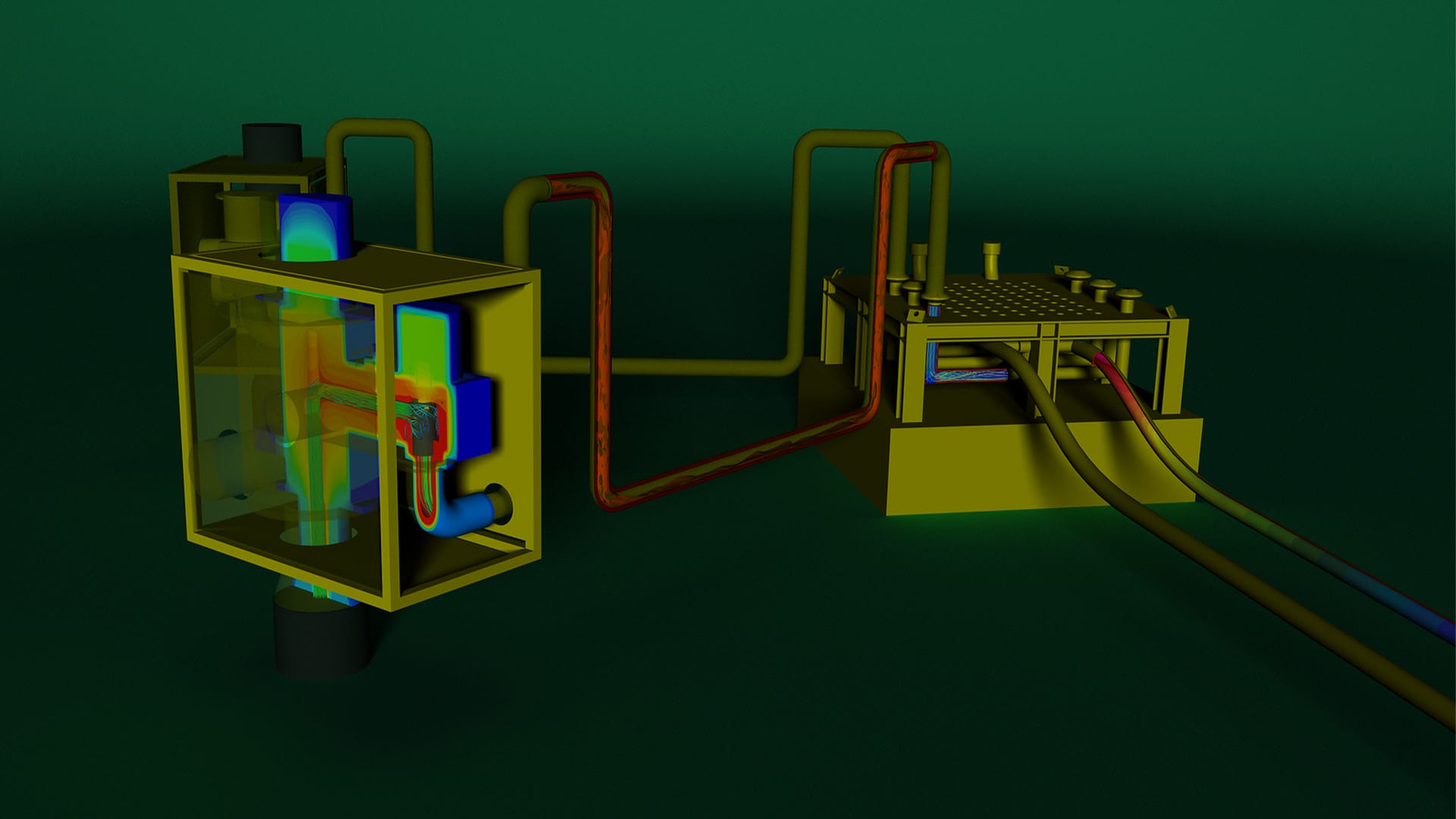
1D system – 3D CFD co-simulations: Integrating 1D system models with detailed 3D CFD simulations, capture system-level behavior.
Electromagnetic (Emag), thermal, and structural coupling: Gain comprehensive analysis, including interactions between fluid flow, heat transfer, and electromagnetic fields.
Optimization studies and reduced order models (ROM)
Topology and adjoint optimization: Refine designs to minimize drag, improve heat transfer, or enhance structural integrity.
Reduced order models (ROM): Efficiently predict system behavior while reducing computational cost. Hybrid aproaches of machine learning or physics-based ROMs provide a valuable executable digital twin in operational or design stages.
Parametric designs and optimizations: Iteratively refine parameters for optimal performance or utilizing SHERPA algorithm for design space exploration and optimization.

Marine applications: hydrodynamic performance
Sink and trim: Hydrodynamics expertise ensures optimal sinkage and trim adjustments for vessels. Whether it’s a ship, yacht, or offshore platform, analyze stability and balance.
Hull performance: Evaluate hull designs using computational fluid dynamics (CFD). From resistance prediction to wave patterns, discover efficient hull shapes and materials.
Virtual tow tanks: The virtual tow tank (VTT) template revolutionizes hull testing. Simulating towing conditions, assess resistance, stability, and maneuverability without physical tank experiments.
Sea trials: Sea trials are critical for validating vessel performance. Model various scenarios:
- Rotating arm tests to assess turning behavior
- Pure yaw or sway maneuvering to predict vessel response
- Self-propulsion modeling to evaluate propulsion efficiency
- Free maneuvering to simulate real-world conditions
Propeller performance: Propeller design impacts efficiency and thrust. Use simulation to optimize blade geometry, cavitation, and wake interactions.
HVAC systems and data centers: Efficient cooling solutions
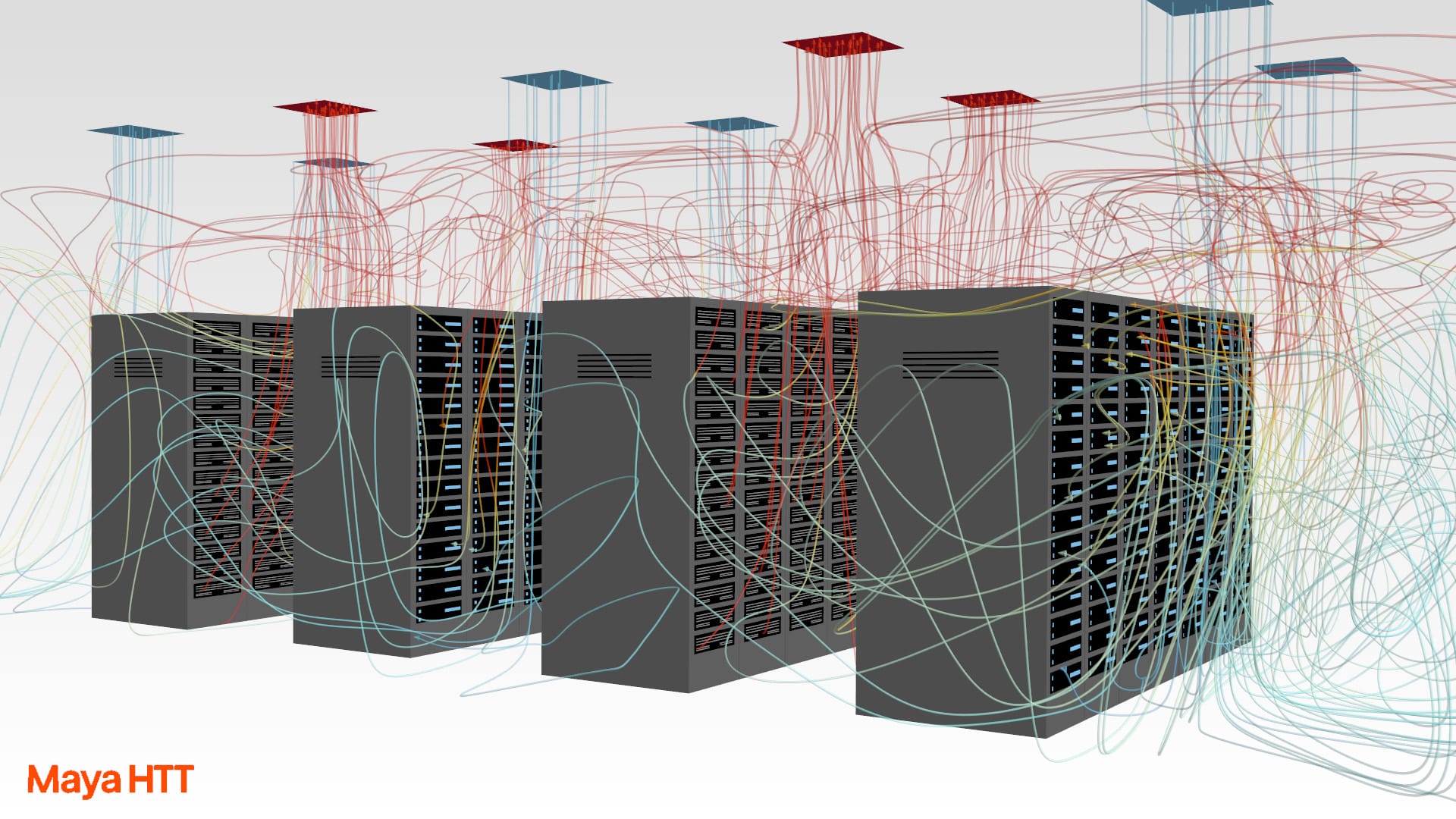
Electronics cooling: In data centers, electronic components generate heat. CFD analysis guides cooling strategies, ensuring optimal airflow, heat sinks, and temperature management.
Electrification and battery simulation: Simulate battery behavior as electric vehicles and renewable energy systems evolve. From thermal management to charging cycles, enhance safety and efficiency.
Battery pack cooling: Electric vehicle battery packs require efficient cooling. Simulation optimizes cooling channels, coolant flow, and temperature distribution.
Coupled solutions (1D System – 3D CFD co-simulations): Integrating 1D system models (e.g., network models) with detailed 3D CFD simulations provides holistic insights. Analyze thermal-electrical interactions and performance.